
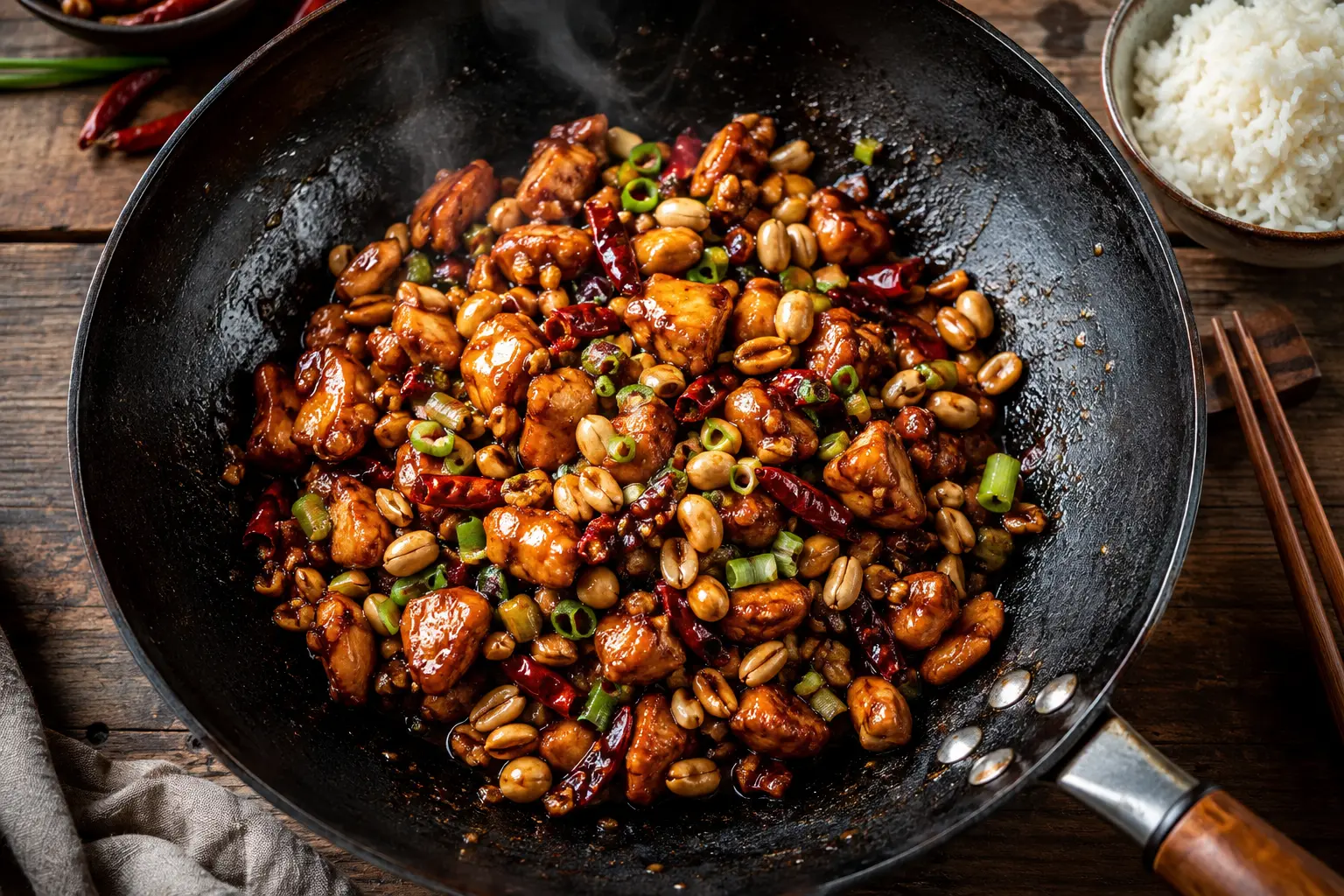

If you’ve ever stood in front of the fridge at 6 p.m. debating whether to order takeout again, this recipe is your answer. Kung Pao chicken is one of those dishes that sounds fancy on a restaurant menu but is genuinely simple to make at home — and once you taste the difference between fresh-wok flavor and a container that’s been sitting in a delivery bag, you won’t go back.
This version gives you tender, juicy chicken, a glossy sauce that’s equal parts sweet, savory, and spicy, plus toasted peanuts and a little tingle from Szechuan peppercorns if you want the real deal. It’s ready in about 30 minutes, uses a short list of pantry staples, and reheats beautifully for lunch the next day.
Let’s get into it.
Quick Recipe Facts
| Detail | Info |
|---|---|
| Prep Time | 15 minutes |
| Cook Time | 15 minutes |
| Total Time | 30 minutes |
| Servings | 4 |
| Cuisine | Chinese, Szechuan |
| Course | Main Dish |
| Difficulty | Easy |
| Calories | ~340 per serving |
| Protein | 28g |
| Carbs | 18g |
| Fat | 17g |
Jump to Recipe ↓ (scroll to the Recipe Card at the bottom)
Table of Contents
- Why You’ll Love This Recipe
- Ingredient Guide
- Equipment Guide
- Step-by-Step Instructions
- Expert Tips
- Common Mistakes
- Recipe Variations
- Serving Ideas
- Storage
- Troubleshooting
- FAQs
- Kitchen Gear That Helps
- Recipe Card
Why You’ll Love This Recipe
This isn’t a “dump everything in a pan and hope” stir-fry. It uses a real technique — velveting the chicken — that’s the actual secret behind why restaurant chicken is so tender compared to homemade. Beyond that:
- It’s fast. Once your ingredients are prepped, the actual cooking takes under 10 minutes.
- The flavor is balanced. Sweet, salty, spicy, and a little tang from black vinegar, with crunchy peanuts for texture.
- It’s flexible. Easy to make milder for kids or spicier for heat lovers.
- It’s great for meal prep. The sauce and chicken hold up well in the fridge, and it reheats without going rubbery if you follow the storage tips below.
- You control the ingredients. No mystery oils, no excess sodium, no MSG unless you want it.
- If you love a fast, better-than-takeout dinner, you’ll want to try my Pepper Steak Stir-Fry Recipe next — it uses a similar high-heat technique and comes together in the same 30 minutes.
Ingredient Guide
Chicken thighs (boneless, skinless): Thighs stay juicier than breast during high-heat stir-frying. If you prefer breast, cut it slightly thinner and don’t overcook it.
Cornstarch: Used in the velveting marinade to coat the chicken and lock in moisture, and again to thicken the sauce at the end. Don’t skip this — it’s the difference between tender and dry chicken.
Soy sauce (light and dark): Light soy sauce brings saltiness and umami; dark soy sauce (if you have it) adds color and a slightly deeper, molasses-like note. Regular soy sauce works fine if that’s all you have.
Shaoxing wine: A Chinese cooking wine that adds depth and helps tenderize the chicken. Dry sherry is the closest substitute. In a pinch, skip it and add a splash of rice vinegar instead.
Black vinegar (Chinkiang vinegar): Adds a malty tang that balances the sweetness. Substitute with a mix of balsamic vinegar and rice vinegar if unavailable.
Sugar: Balances the heat and salt. Don’t skip it — Kung Pao sauce is meant to have a subtle sweetness.
Dried red chilies: These infuse the oil with heat and smokiness without making the dish unbearably spicy (most people don’t actually eat the whole chilies). Adjust quantity to taste.
Szechuan peppercorns (optional but recommended): These create the signature “ma la” tingly-numbing sensation of authentic Szechuan cooking. If you don’t have them, the dish is still delicious — just less traditional.
Roasted peanuts: Unsalted, dry-roasted peanuts are traditional. Cashews are a common, kid-friendly substitute.
Garlic, ginger, scallions: The aromatic backbone of the dish. Fresh is worth it here over jarred versions.
Bell pepper and/or zucchini (optional): Not traditional in every version, but common in American Chinese takeout style. Adds color and crunch.
Shopping tip: Look for Shaoxing wine, black vinegar, and Szechuan peppercorns in the international aisle of a well-stocked grocery store or at an Asian grocery store — they’re inexpensive and last a long time in the pantry.
Storage tip: Szechuan peppercorns and dried chilies keep for months in a sealed jar in a cool, dark cupboard.
Equipment Guide
Wok or large skillet: A wok’s sloped sides make tossing ingredients easier and help you get that slightly charred “wok hei” flavor. A large stainless steel or cast iron skillet works almost as well at home.
High smoke-point oil: Peanut, avocado, or vegetable oil can handle the high heat this dish needs without burning.
Mixing bowls: One for marinating the chicken, one for mixing the sauce ahead of time — this keeps you from scrambling once the wok is hot.
Budget alternative: No wok? A regular nonstick or stainless pan works fine, just don’t overcrowd it, or the chicken will steam instead of sear.
Step-by-Step Instructions
Step 1: Marinate (Velvet) the Chicken
Cut chicken thighs into bite-sized pieces. Toss with a small amount of soy sauce, Shaoxing wine, and cornstarch until every piece is lightly coated. Let it sit for at least 15 minutes.
Why: The cornstarch coating seals in moisture during high-heat cooking, which is why restaurant chicken feels silkier than home versions.
Visual cue: The chicken should look lightly glossy and coated, not wet or clumpy.
Common mistake: Skipping this step or marinating for less than 10 minutes — the texture difference is noticeable.
Step 2: Mix the Sauce
In a small bowl, whisk together soy sauce, black vinegar, sugar, a bit of Shaoxing wine, and a cornstarch slurry (cornstarch mixed with water).
Why: Having the sauce pre-mixed means you’re not fumbling with bottles once the wok is smoking hot — stir-frying moves fast.
Expert tip: Taste the sauce before cooking. It should taste slightly too strong on its own; it will mellow once it hits the hot pan and coats everything.
Step 3: Toast the Peanuts (If Raw)
If using raw peanuts, toast them in a dry pan over medium heat for 3–4 minutes, stirring often, until fragrant and lightly golden. Set aside.
Visual cue: You’ll start to smell a nutty aroma and see light golden color.
Common mistake: Walking away — peanuts go from golden to burnt quickly.
Step 4: Infuse the Oil
Heat oil in your wok over medium-high heat. Add dried red chilies and Szechuan peppercorns (if using) and stir for 20–30 seconds until fragrant.
Why: This step infuses the oil itself with flavor, which is the base of the whole dish.
Common mistake: Letting the chilies blacken and burn — this makes the oil bitter. Pull them out immediately if they start to smoke.
Step 5: Sear the Chicken
Turn heat to high. Add the marinated chicken in a single layer and let it sear for about 1–2 minutes without stirring, then toss and cook another 2–3 minutes until just cooked through.
Why: Searing without stirring immediately builds color and flavor (a light crust) instead of steaming the chicken.
Visual cue: Chicken should turn opaque and lightly golden at the edges.
Common mistake: Overcrowding the pan, which causes steaming instead of searing. Cook in batches if needed.
Step 6: Add Aromatics and Vegetables
Push the chicken to one side, add garlic, ginger, and white parts of scallions. Stir for 30 seconds until fragrant, then mix everything together. Add bell pepper or zucchini here if using.
Why: Garlic and ginger burn quickly, so they go in only briefly, right before the sauce.
Step 7: Add the Sauce
Pour in the pre-mixed sauce and toss everything until it thickens and coats the chicken evenly, about 1–2 minutes.
Visual cue: The sauce will go from watery to glossy and cling to the chicken.
Timing: This happens fast — have your peanuts and scallions ready to go in right after.
Step 8: Finish
Stir in the toasted peanuts and green scallion tops. Remove from heat immediately.
Why: Adding peanuts at the very end keeps them crunchy instead of soggy.

Expert Tips
- Don’t overcook the chicken. Thigh meat is forgiving, but pulling it right when it turns opaque keeps it juicy.
- Use high heat, and don’t crowd the pan. This is the single biggest factor in getting a stir-fry texture instead of a braised, watery texture.
- Balance the sauce to your taste before serving, not just before cooking — a squeeze of lime or extra splash of vinegar at the end can brighten everything up.
- For restaurant-style shine, finish with a small drizzle of sesame oil off the heat, not during cooking (high heat destroys its aroma).
Common Mistakes
| Mistake | Cause | Solution |
|---|---|---|
| Dry, tough chicken | Skipped marinade or overcooked | Velvet the chicken and pull it off heat as soon as it’s opaque |
| Watery sauce | No cornstarch slurry or added too late | Whisk cornstarch into the sauce beforehand, add near the end |
| Soggy peanuts | Added too early | Stir in peanuts only in the last 30 seconds |
| Overly bitter sauce | Burnt chilies or garlic | Keep heat controlled and pull chilies before they blacken |
| Bland flavor | Sauce not tasted/adjusted | Taste and adjust salt, sugar, and acid before serving |
Recipe Variations
Healthy / Lighter: Use chicken breast, reduce oil slightly, and load up on extra vegetables like broccoli or snap peas.
High Protein: Add extra chicken or toss in edamame alongside the peanuts.
Low Sugar: Reduce sugar by half and add a touch more rice vinegar to balance.
Keto: Swap sugar for a keto-friendly sweetener and serve over cauliflower rice.
Gluten-Free: Use tamari or a certified gluten-free soy sauce and check that your Shaoxing wine substitute is GF (dry sherry is safe).
Dairy-Free: This recipe is naturally dairy-free as written.
Kid-Friendly: Skip the dried chilies and Szechuan peppercorns, keep the sweet-savory sauce base.
Party Version: Serve in lettuce cups as a fun, shareable appetizer.
Budget Version: Use chicken breast and skip specialty ingredients like black vinegar — a splash of balsamic and rice vinegar mixed works fine.
Luxury Version: Add jumbo shrimp alongside (or instead of) the chicken for a surf-and-turf spin.
Serving Ideas
- Weeknight Dinner: Serve over steamed jasmine rice with a side of sautéed greens.
- Meal Prep: Portion into containers with rice and vegetables for grab-and-go lunches.
- Potluck or Party: Serve in a chafing dish with toothpicks or in lettuce cups.
- Game Day: Pair with dumplings and spring rolls for a Chinese-takeout-style spread.
- Summer: Serve slightly warm over a cold noodle salad.
- Holiday Spread: Works well as one dish in a multi-course Lunar New Year menu.
Storage
Refrigerator: Store in an airtight container for up to 4 days.
Freezer: Freeze the chicken and sauce (without peanuts) for up to 2 months. Add fresh peanuts after reheating.
Reheating: Reheat in a hot skillet or wok for a couple of minutes to help revive the texture; microwaving works but can make the chicken slightly softer.
Meal Prep Tip: Keep peanuts stored separately and add them right before eating so they stay crunchy. If you’re building out a week of easy dinners, pair this with my High-Protein Sweet Potato Taco Bowl — both reheat well and keep well past day one, which makes lunch prep painless.
Troubleshooting
My sauce is too thin. Mix an extra small amount of cornstarch with cold water and stir it in while the pan is still hot; it will thicken within a minute.
My chicken is chewy. This usually means it was overcooked or skipped the velveting step. Next time, marinate for at least 15 minutes and pull the chicken off heat as soon as it’s opaque.
It’s too spicy. Reduce or remove the dried chilies next time, and serve with extra rice to mellow the heat. A little sugar or a drizzle of honey can also tone down spiciness in the moment.
It’s not spicy enough. Add a spoonful of chili crisp or a pinch of crushed red pepper at the end.
Frequently Asked Questions
What does Kung Pao chicken taste like? It’s a balance of savory, sweet, tangy, and spicy, with a nutty crunch from peanuts and, in the authentic Szechuan version, a tingly numbing sensation from Szechuan peppercorns.
Is Kung Pao chicken very spicy? It’s moderately spicy as traditionally made, but the heat level is easy to adjust by controlling how many dried chilies you use.
What is the difference between Kung Pao chicken and General Tso’s chicken? General Tso’s is typically breaded, deep-fried, and sweeter, while Kung Pao chicken is stir-fried (not battered) and has a more balanced sweet-savory-spicy sauce with peanuts.
Can I make Kung Pao chicken without a wok? Yes. A large skillet works fine — just make sure it’s hot enough and avoid overcrowding it.
What can I use instead of Shaoxing wine? Dry sherry is the closest substitute. In a pinch, a splash of rice vinegar can stand in, though the flavor will be slightly different.
Is Kung Pao chicken gluten-free? It can be, if you use tamari or a certified gluten-free soy sauce and confirm your other sauces are GF.
Can I use chicken breast instead of thighs? Yes, though thighs stay juicier during high-heat cooking. If using breast, cut it slightly thinner and watch the cooking time closely.
What vegetables go well in Kung Pao chicken? Bell peppers, zucchini, broccoli, snap peas, and water chestnuts are all common additions.
How do I keep the peanuts crunchy? Add them in the last 30 seconds of cooking, not earlier, and store them separately if meal prepping.
Can I make this ahead of time? Yes — the chicken and sauce can be made a day ahead and reheated; just add fresh peanuts before serving.
Is this recipe kid-friendly? Yes, if you skip the dried chilies and Szechuan peppercorns and keep the sauce mild.
What should I serve with Kung Pao chicken? Steamed white or jasmine rice is classic; fried rice, lo mien, or steamed vegetables also work well.
Can I freeze Kung Pao chicken? Yes, freeze the chicken and sauce (without peanuts) for up to 2 months.
Why is my sauce not thickening? You likely need more cornstarch slurry, or the pan wasn’t hot enough when the sauce was added.
What’s the best substitute for peanuts if I have an allergy? Roasted cashews or sunflower seeds work well and keep a similar crunch.
Kitchen Gear That Helps
A few tools make this recipe (and stir-frying in general) noticeably easier:
- A carbon steel or well-seasoned wok — heats quickly and evenly, which is important for a proper sear.
- A high smoke-point cooking oil (like avocado or peanut oil) — handles the heat without burning or smoking excessively.
- A fine-mesh strainer or small bowl for cornstarch slurry — makes mixing the thickener lump-free.
- A sturdy wok spatula or wooden spoon — designed for high-heat tossing without scratching your pan.
- An instant-read thermometer — useful if you want to double-check chicken doneness (165°F/74°C) without cutting into it.
- Good kitchen shears — handy for trimming chicken thighs quickly.
- A rice cooker — if you’re making this a regular weeknight dish, a rice cooker takes one more thing off your plate (literally).
(If you shop for any of these through affiliate links on this blog, it helps support free recipes at no extra cost to you — thank you!)

Craving something spicy and crave-worthy after this one? My Hot Honey Fried Chicken Sandwiches bring the same sweet-heat balance in sandwich form, and they’re just as fast to throw together on a weeknight.
Recipe Card
Kung Pao Chicken
A takeout favorite made from scratch — tender chicken, a glossy sweet-spicy sauce, and crunchy roasted peanuts, ready in 30 minutes.
Servings: 4 Prep Time: 15 minutes Cook Time: 15 minutes
Ingredients
For the chicken:
- 1.5 lbs. boneless, skinless chicken thighs, cut into bite-sized pieces
- 1 tablespoon soy sauce
- 1 tablespoon Shaoxing wine (or dry sherry)
- 1 tablespoon cornstarch
For the sauce:
- 3 tablespoons soy sauce
- 1 tablespoon dark soy sauce (optional)
- 2 tablespoons black vinegar (or balsamic + rice vinegar mix)
- 2 tablespoons sugar
- 1 tablespoon Shaoxing wine
- 1 teaspoon cornstarch mixed with 2 tablespoons water
For the stir-fry:
- 3 tablespoons neutral oil (peanut or avocado)
- 6–10 dried red chilies, roughly torn
- 1 teaspoon Szechuan peppercorns (optional)
- 4 cloves garlic, minced
- 1 tablespoon fresh ginger, minced
- 3 scallions, whites and greens separated, sliced
- 1 bell pepper, diced (optional)
- 2/3 cup roasted, unsalted peanuts
Instructions
- Combine chicken with soy sauce, Shaoxing wine, and cornstarch. Marinate 15 minutes.
- Whisk together all sauce ingredients in a small bowl; set aside.
- Heat oil in a wok over medium-high heat. Add dried chilies and Szechuan peppercorns; stir 20–30 seconds until fragrant, then remove chilies if they begin to blacken.
- Turn heat to high. Add chicken in a single layer; sear 1–2 minutes undisturbed, then stir-fry 2–3 minutes until just cooked through.
- Push chicken aside; add garlic, ginger, and scallion whites. Stir 30 seconds until fragrant. Add bell pepper if using.
- Pour in sauce; toss until thickened and glossy, about 1–2 minutes.
- Stir in peanuts and scallion greens. Remove from heat immediately.
- Serve hot over steamed rice.
Notes
- To scale this recipe up, multiply ingredients proportionally, but stir-fry chicken in batches so it sears instead of steams.
- Store leftovers in an airtight container in the fridge for up to 4 days.
- For a milder version, reduce or omit dried chilies and Szechuan peppercorns.
Nutrition (per serving, approximate)
| Nutrient | Amount |
|---|---|
| Calories | 340 |
| Protein | 28g |
| Carbohydrates | 18g |
| Fat | 17g |
| Fiber | 2g |
| Sodium | 720mg |
Nutrition values are estimates and will vary based on exact ingredients and portion sizes.
A note on food safety: Always cook chicken to an internal temperature of 165°F (74°C), and refer to trusted food safety resources (such as your local health department or USDA guidance) for questions about safe handling, storage, and reheating of poultry.
2 thoughts on “Kung Pao Chicken Recipe (Better Than Takeout!) – Easy & Authentic”