
This post may contain affiliate links. If you purchase through them, we may earn a small commission at no extra cost to you. Thank you for supporting our site.
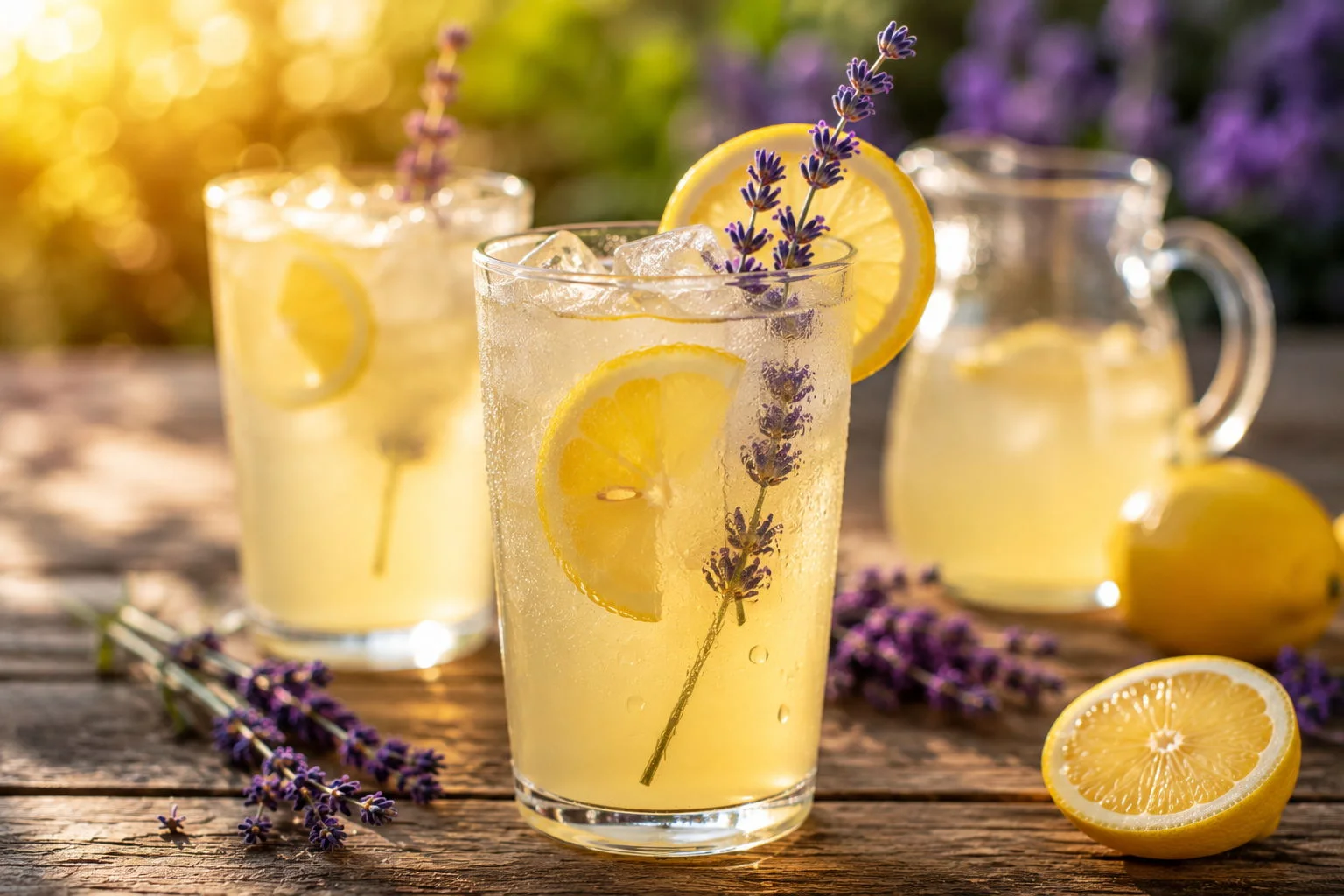
The first time I made lavender lemonade, I wasn’t trying to be fancy. I had a bundle of dried culinary lavender left over from a baking project, a bag of lemons that needed using, and a hot afternoon that demanded something colder than water. I steeped a spoonful of lavender into a simple syrup almost as an experiment, half-expecting it to taste like a candle. It didn’t. It tasted like sunshine with a little bit of perfume — bright lemon up front, then this soft floral hum that lingers just long enough to make you want another sip.
That’s really the appeal of this drink. It looks like something you’d order at a garden brunch, but it comes together with five ingredients and about twenty minutes of actual effort. If you’ve ever wondered how to make lavender lemonade without it tasting like soap (a very fair concern, and one I’ll address head-on), this recipe walks you through exactly how much lavender to use, how long to steep it, and how to balance the floral note so it enhances the lemon instead of fighting it.
This is a lavender lemonade recipe built for real kitchens — not a styled photo you can’t actually replicate. Let’s make a pitcher.
Quick Recipe Facts
| Detail | Info |
|---|---|
| Prep Time | 10 minutes |
| Cook Time | 5 minutes |
| Chill Time | 30 minutes (optional but recommended) |
| Total Time | 45 minutes |
| Servings | 6 (about 8 oz each) |
| Cuisine | American, French-inspired |
| Course | Beverage |
| Difficulty | Easy |
| Calories | 110 per serving |
| Protein | 0g |
| Carbs | 29g |
| Fat | 0g |
Table of Contents
- Why You’ll Love This Recipe
- Ingredient Guide
- Equipment Guide
- Step-by-Step Instructions
- Expert Tips
- Common Mistakes
- Recipe Variations
- Serving Ideas
- Storage
- Troubleshooting
- Frequently Asked Questions
- Recommended Tools (Affiliate Picks)
- Recipe Card
Jump to Recipe — scroll to the bottom for the printable card.
Why You’ll Love This Recipe
This lavender lemonade recipe is the kind of drink that makes people ask “wait, what’s in this?” before they’ve even finished the glass. Here’s who it’s for and why it works.
Who it’s for: anyone who wants a homemade summer drink that feels a little more special than regular lemonade, without turning it into a project. It’s especially great if you’re hosting — bridal showers, garden parties, and Mother’s Day brunches all but require a pitcher of something pretty.
Flavor: tart, sweet, and floral in that order. The lavender is a background note, not the star, so it never overwhelms the citrus.
Texture: silky and light, thanks to a proper simple syrup instead of granulated sugar stirred straight into cold liquid (which never fully dissolves and leaves a gritty texture at the bottom of the glass).
Nutrition: naturally dairy-free, gluten-free, and vegan. Easily adjustable for lower sugar using the variations below.
Convenience: the lavender syrup can be made up to two weeks ahead, which means day-of prep is just squeezing lemons and stirring.
Meal prep advantages: this scales beautifully for a crowd, and the syrup freezes well, so you can make a double batch during lavender season and portion it out all summer.
Ingredient Guide
| Ingredient | Purpose | Flavor & Texture | Substitutions | Shopping Tips | Storage Tips |
|---|---|---|---|---|---|
| Fresh lemons (1 cup juice, about 6–8 lemons) | Provides the tart backbone of the drink | Bright, acidic, clean | Bottled lemon juice in a pinch, though fresh is noticeably better | Choose lemons that feel heavy for their size — they hold more juice | Store at room temperature for up to a week, or refrigerate for three |
| Culinary-grade dried lavender (1–2 tablespoons) | Infuses the floral note into the syrup | Sweet, herbal, slightly citrusy when fresh | Dried lavender is preferred over fresh for consistency, but fresh lavender buds work in the same quantity | Buy lavender specifically labeled “culinary grade” — not from a craft or décor shop, where it may be treated with pesticides not meant for consumption | Keep in an airtight container away from light for up to a year |
| Granulated sugar (3/4 cup) | Sweetens and balances the tartness of the lemon | Clean sweetness that dissolves fully when heated | Honey, agave, or a sugar substitute like monk fruit (see variations) | Any standard granulated sugar works fine | Store in a sealed container indefinitely |
| Filtered water (6 cups, divided) | Dilutes the syrup and lemon juice into a balanced lemonade | Neutral | Tap water is fine if your tap water tastes clean | — | — |
| Ice | Chills the lemonade for serving | Adds dilution and crunch | — | — | — |
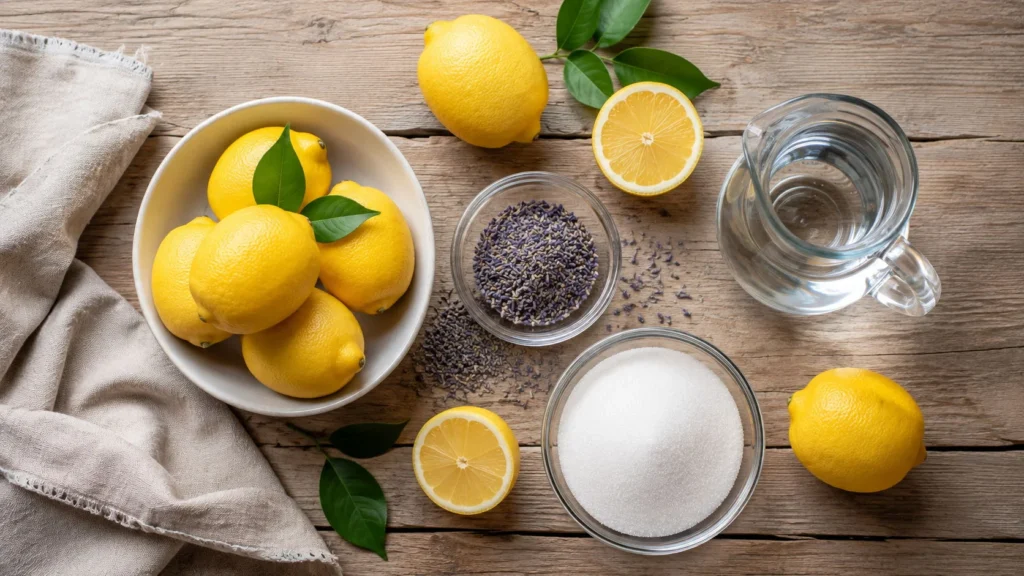
A quick note on lavender: not all lavender is created equal for cooking. English lavender (Lavandula angustifolia) is the variety most commonly sold as culinary lavender because it has a sweeter, less camphorous flavor than French lavender, which can taste more like a bar of soap if overused. If your lavender lemonade ever tastes soapy, it’s almost always a lavender-quantity or steeping-time issue, not the recipe itself — more on fixing that in the Troubleshooting section.
Equipment Guide
| Tool | Why It Matters | Budget Alternative | Upgrade Alternative |
|---|---|---|---|
| Small saucepan | Used to heat the sugar, water, and lavender into syrup | Any small pot you already own | A saucepan with a pour spout for easy straining |
| Fine mesh strainer | Removes the lavender buds from the finished syrup so the lemonade stays smooth | A clean coffee filter or cheesecloth over a bowl | A dedicated fine-mesh conical strainer |
| Citrus juicer or reamer | Extracts juice efficiently and separates out seeds | A basic handheld wooden reamer | An electric citrus juicer for large batches |
| Large pitcher (at least 2 quarts) | Holds the finished lemonade for serving and chilling | Any large heatproof jar or jug | A glass pitcher with a built-in ice core to prevent dilution |
| Measuring cups and spoons | Keeps the sugar-to-water-to-juice ratio consistent | Any set you already have | — |
Step-by-Step Instructions
Step 1: Make the Lavender Simple Syrup
Combine 3/4 cup sugar, 1 cup water, and 1–2 tablespoons dried culinary lavender in a small saucepan over medium heat.
Why: heating the sugar and water together (rather than just stirring sugar into cold liquid) fully dissolves it, and the gentle heat draws the floral oils out of the lavender buds.
What to look for: small bubbles forming around the edge of the pan and the sugar disappearing into the liquid.
Timing: about 3–4 minutes to dissolve and simmer.
Texture cue: the liquid should look clear, not cloudy, once the sugar is fully dissolved.
Common mistake: boiling the syrup hard instead of simmering gently. A rolling boil can make the lavender taste bitter and overpowering.
Expert tip: once the sugar dissolves, remove the pan from heat immediately and let the lavender steep off-heat, covered, for 10–15 minutes. This is where most of the floral flavor actually develops.
Step 2: Strain the Syrup
Pour the syrup through a fine mesh strainer into a heatproof jar or bowl, pressing gently on the lavender buds to extract any remaining liquid.
Why: leftover lavender buds in the syrup will continue to steep and can turn the flavor bitter and overly perfumed over time.
What to look for: a clear, pale golden syrup with no visible lavender particles.
Common mistake: skipping the strain and leaving buds in the syrup “for looks.” It’s not worth the bitterness that develops within a day.
Step 3: Juice the Lemons
Juice 6–8 lemons until you have 1 cup of fresh lemon juice, straining out any seeds.
Why: fresh juice has a brighter, more layered flavor than bottled juice, which is often pasteurized and can taste slightly cooked.
Expert tip: rolling the lemons firmly on the counter before cutting, or microwaving them for 10 seconds, helps release more juice.
Visual cue: the juice should look cloudy and pulpy, not clear — that’s a sign it’s fresh.
Step 4: Combine and Dilute
In your pitcher, combine the lemon juice, cooled lavender syrup, and 5 cups of cold water. Stir well.
Why: this ratio balances tartness, sweetness, and floral flavor without any one element dominating.
Texture cue: the lemonade should look pale golden-purple and slightly cloudy.
Common mistake: adding all the water before tasting. Add 4 cups first, taste, then adjust with the remaining cup depending on how strong you like it.
Step 5: Chill and Serve
Refrigerate for at least 30 minutes, then serve over ice.
Why: chilling allows the flavors to fully meld, and it tastes noticeably better cold than at room temperature.
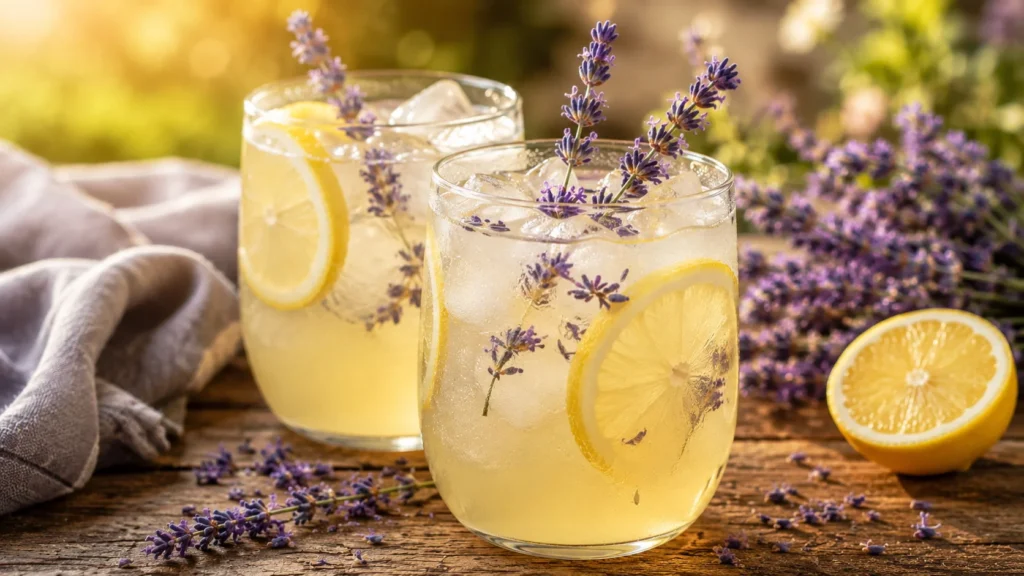
Expert tip: garnish each glass with a lemon slice and a small sprig of fresh lavender or mint for a restaurant-style presentation.
Expert Tips
- Steep longer for a stronger floral note, but never boil the lavender. Heat brings out bitterness fast; time brings out fragrance slowly.
- Add a splash of lemon zest to the syrup while it steeps. This deepens the citrus flavor without adding more acidity.
- Use superfine sugar for a slightly faster dissolve if you’re short on time.
- For a restaurant-style layered look, pour the lavender syrup in last over ice so it creates a gradient before stirring.
- Taste before you dilute fully. Lemon acidity varies a lot between fruit, so treat the final cup of water as adjustable, not fixed.
For an extra-cool pairing on a hot day, serve a glass of lavender lemonade alongside one of these Ninja Creami protein ice cream recipes — a fun way to round out a warm-weather dessert spread.
Common Mistakes
| Problem | Cause | Solution |
|---|---|---|
| Lemonade tastes soapy or like perfume | Too much lavender, or lavender steeped too long, or non-culinary lavender used | Cut lavender to 1 tablespoon and steep off-heat for no more than 15 minutes; always use culinary-grade lavender |
| Lemonade tastes flat | Not enough fresh lemon juice, or juice was diluted too much | Use fresh-squeezed juice and add it in gradually, tasting as you go |
| Syrup is cloudy or gritty | Sugar wasn’t fully dissolved before removing from heat | Return the syrup to low heat and stir until fully clear before straining |
| Lavender flavor barely noticeable | Old, stale lavender or too short a steep time | Use lavender within a year of purchase and steep for the full 15 minutes |
| Lemonade separates or looks watery | Ice melted too quickly or lemonade was over-diluted | Serve in a chilled pitcher and add ice just before serving, not hours ahead |
Recipe Variations
Healthy Version: reduce sugar to 1/2 cup and add an extra 1/2 cup water to keep the syrup pourable.
High Protein Version: stir in unflavored collagen powder just before serving; it dissolves well in cold liquid and doesn’t change the flavor.
Low Sugar Version: substitute the sugar with a 1:1 monk fruit sweetener blend.
Keto Version: use a keto-friendly erythritol blend in place of sugar; note the texture of the syrup will be slightly thinner.
Gluten Free: this recipe is naturally gluten free with no adjustments needed.
Dairy Free: naturally dairy free as written.
Seasonal Version (Fall): swap half the water for warm apple cider for a lavender-apple lemonade.
Holiday Version: add a cinnamon stick and a few cloves to the syrup while it steeps for a festive twist.
Kid Friendly Version: reduce lavender to 1 teaspoon so the floral note is very subtle.
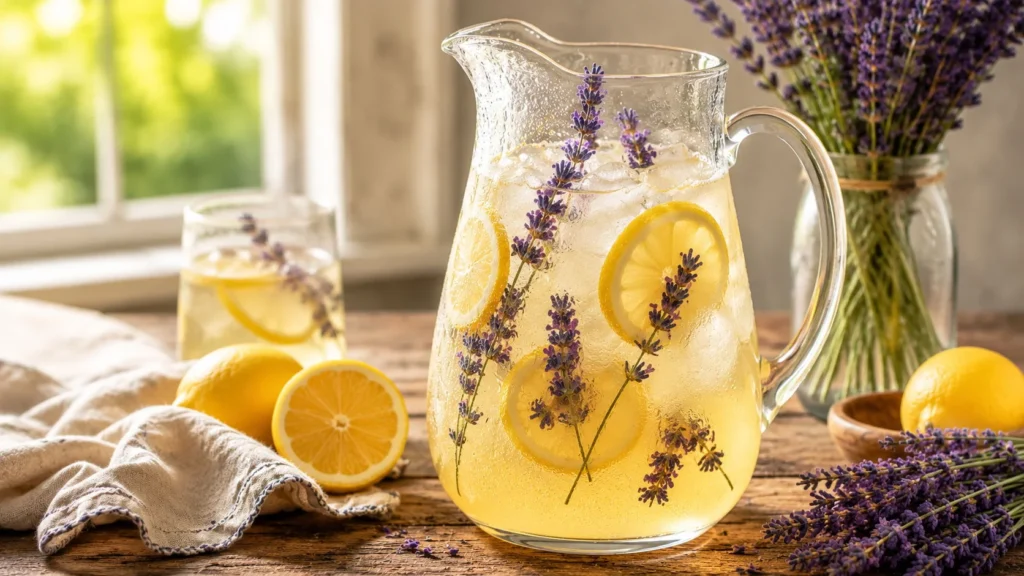
Party Version: serve in a large glass beverage dispenser with whole lemon slices and lavender sprigs floating inside.
Budget Version: use bottled lemon juice and skip fresh lavender garnish; the syrup still carries the flavor.
Luxury Version: top with a splash of prosecco or sparkling wine just before serving for a lavender lemonade spritz. Lavender lemonade pairs beautifully with something sweet on the side — try serving it with a batch of low sugar chocolate chip cookies for an easy afternoon treat that isn’t overly sweet.
Serving Ideas
Breakfast: alongside a light pastry or fruit plate.
Lunch: paired with a chicken salad sandwich or a Niçoise-style salad.
Dinner: as a non-alcoholic option next to grilled fish or roast chicken.
Dessert: poured alongside lemon bars or shortbread cookies for a matching flavor profile.
Meal Prep: batch the syrup and store separately from the lemon juice so you can mix fresh servings all week.
Potluck: bring the syrup and juice separately in mason jars, then mix on-site with ice.
BBQ: serve in a large dispenser alongside iced tea for guests to choose between.
Picnic: pack in a thermos with ice to keep cold for hours.
Baby Shower: garnish with edible flowers for a soft, feminine presentation.
Bridal Shower: serve in individual mason jars with striped paper straws.
Christmas: swap in the holiday spiced variation above.
Thanksgiving: serve as a lighter alternative to heavier holiday drinks.
Game Day: make the luxury version as a lavender lemonade spritz for adults.
Summer Parties: the classic base recipe, served ice-cold in a clear glass pitcher. If you love the idea of dressing up a classic lemonade, you might also enjoy our cucumber mint lemonade, another easy way to turn simple ingredients into a genuinely refreshing summer drink.
Storage
Counter: not recommended; lemonade with fresh juice should be refrigerated within an hour of making.
Refrigerator: store in an airtight pitcher or jar for up to 5 days. The lavender syrup alone keeps for up to 2 weeks refrigerated.
Freezer: the lavender syrup freezes well in ice cube trays for up to 3 months — perfect for flavoring a single glass at a time. The full mixed lemonade is not recommended for freezing since the texture changes once thawed.
Reheating: not applicable; always serve cold.
Meal Prep: keep the syrup and lemon juice stored separately, and combine with water fresh each time for the best flavor and texture.
Shelf Life: 5 days refrigerated for the finished lemonade; 2 weeks for the syrup alone.
Troubleshooting
My lemonade tastes bitter. This usually means the lavender was boiled instead of steeped off-heat, or too much lavender was used. Start with 1 tablespoon next time and steep gently.
The color turned brown instead of purple-gold. Some lavender varieties don’t tint the syrup purple at all — that’s normal and doesn’t affect flavor. A truly purple lemonade usually comes from a few drops of butterfly pea flower powder or a tiny bit of purple food coloring, which is optional and purely cosmetic.
My syrup crystallized in the fridge. This happens if the sugar wasn’t fully dissolved before cooling. Gently reheat the syrup with a tablespoon of water, stir until smooth, then cool again.
The lemonade is too tart. Add a small amount of extra syrup, 1 tablespoon at a time, rather than plain sugar, to keep the flavor balanced.
Frequently Asked Questions
What is lavender lemonade made of? Lavender lemonade is made from fresh lemon juice, water, sugar, and a small amount of culinary-grade dried lavender steeped into a simple syrup.
Is lavender lemonade safe to drink? Yes, as long as the lavender used is labeled culinary or food-grade. Decorative or craft-store lavender may be treated with substances not meant for consumption.
Does lavender lemonade taste like soap? It can if too much lavender is used or if it’s steeped for too long, especially with a boiling method. Used in the right amount and steeped gently, it tastes floral and pleasant, not soapy.
How much lavender do you put in lemonade? For a standard pitcher (about six servings), 1 to 2 tablespoons of dried culinary lavender steeped in the simple syrup is the right range. Start with 1 tablespoon if you’re new to the flavor.
Can you use fresh lavender for lemonade? Yes, fresh culinary lavender buds work in the same quantity as dried, though the flavor may be slightly milder and less concentrated.
How long does homemade lavender lemonade last? Up to 5 days in the refrigerator when stored in an airtight container.
Can I make lavender lemonade ahead of time? Yes. The syrup can be made up to two weeks in advance, and the full lemonade can be mixed a day or two before serving.
What kind of lavender is used for cooking? English lavender is the most commonly recommended variety for cooking because of its sweeter, less bitter flavor compared to other varieties.
Is culinary lavender different from garden lavender? Yes. Culinary lavender is grown and processed specifically for consumption, while garden or decorative lavender may be treated with pesticides not approved for food use.
Can you freeze lavender lemonade? The syrup freezes well in ice cube trays, but the fully mixed lemonade is best made fresh, since freezing changes its texture.
What pairs well with lavender lemonade? Lemon desserts, light salads, grilled chicken, and shortbread cookies all complement the floral-citrus flavor well.
How do you make lavender lemonade less bitter? Reduce the amount of lavender, avoid boiling it, and always strain the syrup thoroughly before mixing.
Can kids drink lavender lemonade? Yes, culinary lavender in small amounts is safe for children; consider using the kid-friendly variation with a lighter floral note.
Is lavender lemonade good for you? It offers the same vitamin C benefits as regular lemonade, and lavender is traditionally associated with a calming aroma, though this recipe should be enjoyed as a treat rather than a health remedy.
What can I substitute for lavender in lemonade? Fresh mint, basil, or rosemary all work as floral-herbal alternatives if lavender isn’t available.
Tools That Make This Recipe Easier
This section may contain affiliate links. If you purchase through them, I may earn a small commission at no extra cost to you.
1. Citrus Juicer Best for: quickly juicing large batches of lemons. Why it helps: cuts juicing time significantly compared to a handheld reamer. Key features: seed-catching strainer, easy-pour spout. Buying considerations: manual presses are cheaper but slower for large batches; electric juicers are faster but bulkier to store.
2. Fine Mesh Strainer Set Best for: straining lavender buds cleanly from the syrup. Why it helps: prevents gritty texture and bitter over-steeping. Key features: multiple sizes, stainless steel mesh. Buying considerations: look for a fine enough mesh to catch small lavender buds.
3. Glass Beverage Pitcher with Lid Best for: serving and storing lemonade. Why it helps: keeps the drink fresh and prevents fridge odors from seeping in. Key features: airtight lid, easy-pour spout. Buying considerations: glass is easiest to clean but heavier than plastic.
4. Culinary-Grade Dried Lavender Best for: guaranteeing food-safe flavor. Why it helps: takes the guesswork out of sourcing the right lavender. Key features: sourced specifically for cooking and baking. Buying considerations: check that the packaging specifies “culinary grade” or “food grade.”
5. Small Saucepan Best for: making the lavender simple syrup. Why it helps: even heat distribution prevents scorching the sugar. Key features: non-stick coating, pour spout. Buying considerations: a 1–2 quart size is ideal for small syrup batches.
6. Mason Jars with Straws Best for: individual servings at parties. Why it helps: adds a charming, rustic presentation for guests. Key features: reusable lids, matching glass straws. Buying considerations: look for wide-mouth jars for easier ice and garnish additions.
7. Ice Cube Trays Best for: freezing extra lavender syrup for single servings. Why it helps: makes it easy to flavor one glass at a time without making a full pitcher. Key features: flexible silicone, easy-release design. Buying considerations: silicone trays release cubes more easily than hard plastic.
8. Handheld Citrus Reamer Best for: small batches or when you don’t want to pull out a bigger juicer. Why it helps: quick, low-cleanup option for juicing a few lemons. Key features: wooden or ergonomic grip handle. Buying considerations: best suited for smaller quantities of lemons.
Recipe Card
Lavender Lemonade
A bright, floral homemade lemonade made with fresh lemon juice and a fragrant lavender simple syrup. Ready in under an hour, perfect for warm-weather entertaining.
Prep Time: 10 minutes Cook Time: 5 minutes Chill Time: 30 minutes Total Time: 45 minutes Servings: 6 (scalable up or down)
Ingredients
- 3/4 cup granulated sugar
- 1 cup water (for syrup)
- 1–2 tablespoons dried culinary lavender
- 1 cup fresh lemon juice (about 6–8 lemons)
- 5 cups cold water (for diluting)
- Ice, for serving
- Lemon slices and lavender sprigs, for garnish
Instructions
- Combine sugar, 1 cup water, and lavender in a small saucepan. Heat gently until the sugar dissolves, about 3–4 minutes.
- Remove from heat, cover, and let steep for 10–15 minutes.
- Strain the syrup through a fine mesh strainer into a jar, discarding the lavender.
- Juice the lemons to yield 1 cup of fresh juice, straining out seeds.
- In a large pitcher, combine the lemon juice, cooled lavender syrup, and 5 cups cold water. Stir well.
- Taste and adjust with additional water if desired.
- Refrigerate for at least 30 minutes, then serve over ice with lemon and lavender garnish.
Notes
- Use culinary-grade lavender only.
- Syrup can be made up to two weeks ahead.
- For a stronger floral flavor, steep the lavender closer to 15 minutes rather than 10.
Nutrition (per serving) Calories: 110 | Protein: 0g | Carbs: 29g | Fat: 0g
Cook Mode: Keep screen awake while following instructions.
Scaling Options: Multiply all ingredients by 2 or 3 for a larger pitcher or beverage dispenser; syrup ratio stays consistent regardless of batch size.