

This post may contain affiliate links. If you make a purchase through one, I may earn a small commission at no extra cost to you. I only recommend products I’d actually use in my own kitchen.
There’s a particular kind of disappointment that comes from ordering Thai green curry at a restaurant and getting a bowl of watery green liquid with three sad pieces of chicken floating in it. I’ve been there more times than I’d like to admit, which is exactly why I started making this at home.
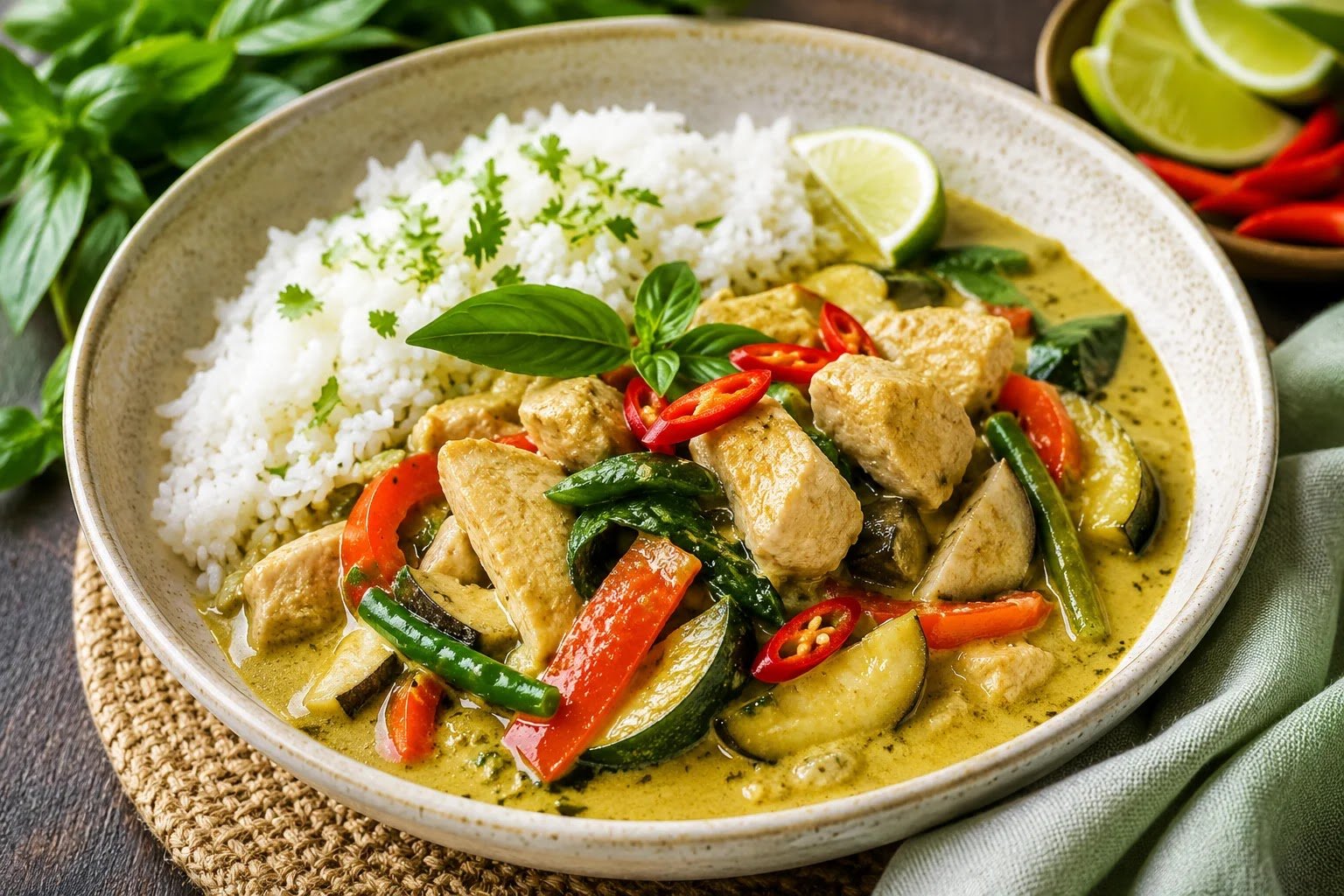
This version is creamy without being heavy, spicy without blowing your head off (though you control that part), and loaded with enough vegetables and tender chicken that it actually feels like a meal instead of a soup. The whole thing comes together in about 40 minutes, most of which is just letting things simmer while you do other stuff.
If you’ve been intimidated by Thai cooking because you think you need a dozen obscure ingredients or hours of prep, I promise this isn’t that. You can make an excellent green curry with a good store-bought paste and a handful of pantry staples, and I’ll show you exactly how to make it taste like it came from your favorite Thai spot down the street.
If you love how quickly a good curry paste builds flavor here, you’ll want to try my Kung Pao Chicken Recipe next — another better-than-takeout dinner that trades coconut milk and basil for a punchy, savory-sweet stir-fry sauce, and comes together just as fast on a weeknight.
Jump to Recipe
Prep Time: 15 minutes
Cook Time: 25 minutes
Total Time: 40 minutes
Servings: 4–6
Course: Main Dish
Cuisine: Thai
Difficulty: Easy
Calories: ~410 per serving
Why You’ll Love This Recipe
This curry hits that sweet spot between “impressive enough for guests” and “easy enough for a random Tuesday.” A few reasons it’s earned a permanent spot in my dinner rotation:
- It’s genuinely fast. Unlike a lot of braises or slow-simmered dishes, green curry paste is already packed with flavor, so you’re not waiting hours for depth to develop.
- It’s endlessly adaptable. Swap the protein, load up on whatever vegetables are wilting in your crisper, adjust the heat up or down. The base method stays the same.
- It reheats beautifully. Curries are one of those rare dishes that taste even better the next day, which makes this a fantastic meal prep option.
- It satisfies a takeout craving for a fraction of the cost. One batch of this feeds a family for less than a single restaurant order.
This recipe is perfect for busy parents who want a real dinner on the table without real effort, for anyone meal prepping lunches for the week, and for people who love bold flavor but don’t want to spend their evening babysitting a stove.
Ingredient Guide
Thai green curry paste is the backbone of this dish. Look for it in the international aisle, usually in small jars or cans. Brands vary quite a bit in heat level, so start with less than you think you need and add more to taste. If you can find one at an Asian grocery store, it will almost always outperform the ones at a mainstream supermarket.
Full-fat coconut milk gives the curry its signature richness. Don’t reach for the “lite” version here — it separates less and gives you that glossy, restaurant-style sauce. Shake the can well before opening.
Chicken thighs are my preference over breast meat because they stay juicy through the simmer and don’t turn stringy. Boneless, skinless thighs cut into bite-sized pieces work best.
Fish sauce adds a savory, umami backbone that’s hard to replicate with anything else. It smells strong straight from the bottle but mellows completely once cooked. If you need a substitute, a mix of soy sauce and a splash of lime juice gets you partway there.
Palm sugar or brown sugar balances the heat and saltiness. A small amount goes a long way.
Thai basil is worth seeking out if you can find it — it has a slightly anise-like flavor that’s different from Italian basil. Regular basil is a fine substitute if that’s what you have.
Bamboo shoots and Thai eggplant are traditional additions, but if your store doesn’t carry them, bell peppers, zucchini, and regular eggplant all work well.
Kaffir lime leaves add a floral, citrusy aroma that’s genuinely hard to substitute, but the curry is still delicious without them if you can’t track them down.

Equipment Needed
- A wide, heavy-bottomed pot or wok — the wide surface area helps the paste toast properly and the sauce reduce evenly.
- A sturdy wooden spoon or silicone spatula — you’ll be scraping the bottom of the pot as the paste fries, and you want something that won’t melt or scratch.
- A sharp chef’s knife — for evenly sized chicken and vegetable pieces, which means even cooking.
- Measuring cups — coconut milk ratios matter more than you’d think for getting the right consistency.
Ingredients
For the curry:
- 2 tablespoons vegetable oil
- 3–4 tablespoons Thai green curry paste (adjust to taste)
- 2 cans (13.5 Oz each) full-fat coconut milk, divided
- 1.5 lbs. boneless, skinless chicken thighs, cut into bite-sized pieces
- 1 tablespoon fish sauce
- 1 tablespoon palm sugar or brown sugar
- 1 red bell pepper, sliced
- 1 small eggplant or 1 cup bamboo shoots, sliced
- 1 cup green beans, trimmed and halved
- 3–4 kaffir lime leaves (optional)
- 1 cup fresh Thai basil leaves
- 1–2 Thai chilies, sliced (optional, for extra heat)
- Juice of half a lime
For serving:
- Steamed jasmine rice
- Extra Thai basil leaves
- Lime wedges
Step-by-Step Instructions
1. Fry the curry paste.
Heat the oil in your wide pot over medium heat. Once shimmering, add the curry paste and cook, stirring constantly, for about 2 minutes until it becomes fragrant and slightly darker in color. This step matters more than people realize — it wakes up the spices in the paste and prevents the curry from tasting flat or raw.

2. Add the thick coconut cream.
Scoop just the thick cream from the top of one can of coconut milk (don’t shake that can beforehand) and add it to the pot. Stir it into the paste and let it simmer for 3–4 minutes until the oil starts to separate slightly at the edges. This is the traditional method for building a rich, well-emulsified sauce rather than a thin, watery one.
3. Add the chicken.
Add the chicken pieces and stir to coat them in the paste mixture. Cook for about 3 minutes until the outside is no longer pink.
4. Pour in the remaining coconut milk.
Add the rest of both cans of coconut milk, along with the fish sauce and sugar. Stir well and bring to a gentle simmer. Avoid a hard boil, which can cause the coconut milk to separate unpleasantly.
5. Add the vegetables.
Add the bell pepper, eggplant or bamboo shoots, and kaffir lime leaves if using. Simmer for 10–12 minutes until the chicken is fully cooked and the vegetables are tender but not mushy.

6. Add the quick-cooking vegetables.
Stir in the green beans during the last 4–5 minutes of cooking so they stay slightly crisp.
7. Finish with basil and lime.
Turn off the heat and stir in the fresh Thai basil and sliced chilies if using. The residual heat will wilt the basil perfectly without overcooking it. Finish with a squeeze of fresh lime juice.
8. Taste and adjust.
Taste the sauce. Need more salt? Add a splash more fish sauce. Too spicy? A touch more coconut milk or sugar mellows it out. Too mild? Stir in more curry paste or fresh chili.
9. Serve.
Spoon over steamed jasmine rice and garnish with extra basil leaves and a lime wedge on the side.
Expert Tips
- Don’t shake the first can of coconut milk. Letting the cream rise to the top and using it to fry the paste is the single biggest thing that separates a homemade curry that tastes “fine” from one that tastes like it came from a restaurant.
- Taste your curry paste before committing to a quantity. Brands vary enormously in saltiness and heat, so a small taste test with a spoon (mixed with a little coconut milk) saves you from over- or under-seasoning the whole pot.
- Add basil off the heat. Cooking basil directly in the simmering curry turns it dull and bitter. Stirring it in after the heat is off keeps it bright and fragrant.
- Let the curry rest for 5 minutes before serving. The flavors settle and the sauce thickens slightly, giving you a better texture on the plate.
Common Mistakes
- Using lite coconut milk. It results in a thin, watery sauce that never quite develops the right body.
- Skipping the paste-frying step. Dumping everything into the pot at once without toasting the paste first leaves the curry tasting flat and one-dimensional.
- Boiling instead of simmering. A hard boil can cause the coconut milk to break and turn grainy.
- Overcooking the vegetables. Adding everything at the same time means some vegetables turn to mush while others are still crunchy. Stagger them based on cook time.
- Forgetting to taste and adjust at the end. Curry pastes vary so much between brands that skipping this step is the most common reason people find their curry too bland or too salty.
- wrap-up: If you’re in a comfort-food mood, crispy fried chicken with a sweet-and-spicy glaze is always a reliable go-to.
Recipe Variations
- Seasonal: Use pumpkin or butternut squash in the fall, or fresh corn and zucchini in the summer.
- Healthy: Swap chicken thighs for chicken breast or firm tofu, and load up on extra vegetables.
- High Protein: Add a soft-boiled egg on top or increase the chicken to 2 lbs. Craving something equally colorful and protein-packed but with a completely different flavor profile? My High-Protein Sweet Potato Taco Bowl is a 30-minute, Mexican-inspired dinner that fits the same “healthy dinner that doesn’t feel like a compromise” spirit as this curry.
- Low Sugar: Reduce or omit the palm sugar; the coconut milk already provides natural sweetness.
- Holiday: Serve in a large decorative bowl with extra herbs and chili oil for a festive dinner party centerpiece.
- Kid Friendly: Use less curry paste and skip the fresh chilies for a much milder version.
- Party Version: Serve in small individual bowls or cups as part of an Asian-inspired appetizer spread.
- Budget Version: Use chicken drumsticks or a whole cut-up chicken instead of boneless thighs, and bulk up with cabbage and carrots.
Best Pairings
Drinks: A crisp lager, a lightly sweet Riesling, or Thai iced tea all complement the richness and spice beautifully.
Side Dishes: “Roasted Cheese Zucchini makes a great side if you want to round out the meal with something lighter.”
Desserts: Mango sticky rice or a scoop of coconut ice cream is the perfect way to end the meal on a cooling note.
Serving Ideas
This curry works well for family dinners, casual dinner parties, and potlucks where you want something a little different from the usual lineup. It’s easy to double for a crowd, holds up well on a buffet-style table, and makes a great addition to a summer gathering when you want something warm alongside lighter dishes. It’s also become one of my go-to options for meal prep lunches during the week.
Storage
Refrigerator: Store in an airtight container for up to 4 days.
Freezer: Freezes well for up to 2 months. Note that the sauce may separate slightly upon thawing — a quick stir while reheating brings it back together.
Reheating: Reheat gently on the stovetop over low heat, stirring occasionally. Microwaving works too, but stir every 30 seconds to keep the sauce from breaking.
Meal Prep: Portion into individual containers with rice for easy grab-and-go lunches throughout the week.
AMAZON AFFILIATE SECTION
This post contains affiliate links. As an Amazon Associate, I earn from qualifying purchases at no extra cost to you.
Kitchen Essentials We Actually Use
A Heavy-Bottomed Wok or Sauté Pan
If you cook Asian-inspired dishes even semi-regularly, a good wide pan makes a real difference in how evenly the paste toasts and the sauce reduces. We reach for ours multiple times a week — it’s one of those tools that quietly earns its cabinet space. Best for anyone who cooks stir-fries, curries, or sautés often and wants more even heat distribution than a standard saucepan gives.
A Sturdy Wooden Spoon Set
Nothing fancy needed here, just something that can handle scraping a hot pan without melting or scratching your cookware. A basic wooden spoon set is inexpensive and lasts for years, and it’s especially useful for the step where you’re frying the curry paste and need to keep it moving constantly. Great for anyone building out their first “real” set of cooking tools.
A Rice Cooker
If you make rice as often as we do, a simple rice cooker takes the guesswork out completely and frees up a burner while your curry simmers. It’s the kind of small appliance that ends up getting used almost daily once you have one. Especially helpful for anyone who eats rice multiple times a week and is tired of pots boiling over or rice coming out gummy.
A Good Citrus Juicer
For getting the most out of your limes without the mess, a small handheld citrus juicer is a nice, inexpensive upgrade from squeezing by hand. Since this recipe calls for fresh lime juice at the very end, it’s a small tool that makes that final step quicker and less messy — best for anyone who cooks with citrus regularly.
A Fine-Mesh Strainer
Useful if you ever make your own curry paste from scratch or want to strain fresh coconut milk for an even smoother sauce. It’s a low-cost tool that pulls double duty for straining stocks, rinsing rice, or sifting dry ingredients in other recipes. Best for home cooks who like to make things from scratch when they have the time.
A Set of Prep Bowls
Curry comes together quickly once it’s on the stove, so having your chicken, vegetables, and herbs already portioned into small bowls makes the actual cooking process much less stressful. Ideal for anyone who’s felt overwhelmed trying to chop an ingredient while something else is already cooking.
An Instant-Read Thermometer
A simple way to make sure chicken thighs have reached a safe internal temperature without cutting into them and losing juices. Especially useful for less experienced cooks who want extra confidence that the chicken is fully cooked through.
Glass Meal Prep Containers
Since this curry reheats so well, good quality glass containers make it easy to portion out lunches for the week without worrying about sauce staining plastic or absorbing odors. Best for anyone using this recipe as part of a weekly meal prep routine.
If you’re in a comfort-food mood after all that spice, my Hot Honey Fried Chicken Sandwiches are another reader favorite — crispy, sweet, and about as far from a coconut curry as you can get, which makes it a fun contrast for another night in the rotation.
Frequently Asked Questions
Is Thai green curry spicier than red curry?
Yes, generally. Green curry uses fresh green chilies, which tend to have a sharper, more immediate heat than the dried red chilies used in red curry paste.
Can I make this vegetarian?
Yes. Swap the chicken for tofu or extra vegetables, and check that your curry paste doesn’t contain shrimp paste (many do). Use soy sauce instead of fish sauce.
What can I use instead of fish sauce?
A combination of soy sauce and a small squeeze of lime juice approximates the salty, umami flavor, though the taste won’t be identical.
Can I use chicken breast instead of thighs?
Yes, though thighs stay juicier during the simmer. If using breast meat, reduce the simmer time slightly to avoid drying it out.
How spicy is this recipe?
It depends almost entirely on your curry paste brand and how much you use. Start with less and add more to taste.
Can I make this ahead of time?
Yes, and it often tastes even better the next day once the flavors have had time to meld.
What’s the difference between Thai basil and regular basil?
Thai basil has a slightly spicy, anise-like flavor and sturdier leaves, while Italian basil is milder and more delicate. Both work in this recipe.
Can I use a slow cooker for this?
You can, though I’d add the coconut milk and vegetables partway through rather than at the very start to avoid overcooking them.
Is coconut milk the same as coconut cream?
No. Coconut cream is thicker and richer, while coconut milk is thinner. This recipe uses the natural separation within a can of full-fat coconut milk to get both.
Can I freeze leftovers?
Yes, for up to 2 months, though the texture of the vegetables softens somewhat after freezing.
What rice pairs best with green curry?
Jasmine rice is traditional and its subtle floral aroma complements the curry beautifully.
Can I add other vegetables?
Absolutely — mushrooms, snap peas, baby corn, and carrots all work well.
Why did my coconut milk sauce look grainy or separated?
This usually happens from boiling too hard. Keep the heat at a gentle simmer throughout.
Can I make my own curry paste from scratch?
Yes, though it requires a longer ingredient list (lemongrass, galangal, green chilies, shallots, garlic, and more) and a mortar and pestle or food processor. Store-bought paste is a great shortcut for weeknight cooking.
How do I make it less spicy after it’s already cooked?
Stir in a bit more coconut milk and a pinch of sugar to mellow the heat.
Conclusion
Once you’ve made this a couple of times, it stops feeling like a “recipe” and starts feeling like a method you can riff on with whatever you have in the fridge. That’s really the beauty of a good curry — it’s forgiving, forgiving, and endlessly good the next day for lunch.
For another cozy dinner idea once the weather turns, don’t miss my Golumpki Soup — cabbage, ground beef, rice, and tomato broth simmered into one pot, a completely different kind of comfort than this curry but just as satisfying on a weeknight.

If you make this, I’d love to hear how it turned out and what you added or swapped — drop a comment below. And if this is going into your regular rotation, do me a favor and save it to Pinterest so you can find it again on a busy weeknight.
1 thought on “Thai Green Curry Recipe (Better Than Takeout, 40 Minutes)”