

INTRODUCTION
Stuffed cabbage rolls are one of those dishes everyone loves and almost nobody wants to actually make. Between blanching individual cabbage leaves, portioning filling, rolling each one without tearing the leaf, and simmering a full tray — it’s a labor of love that tends to get saved for holidays, if it gets made at all.
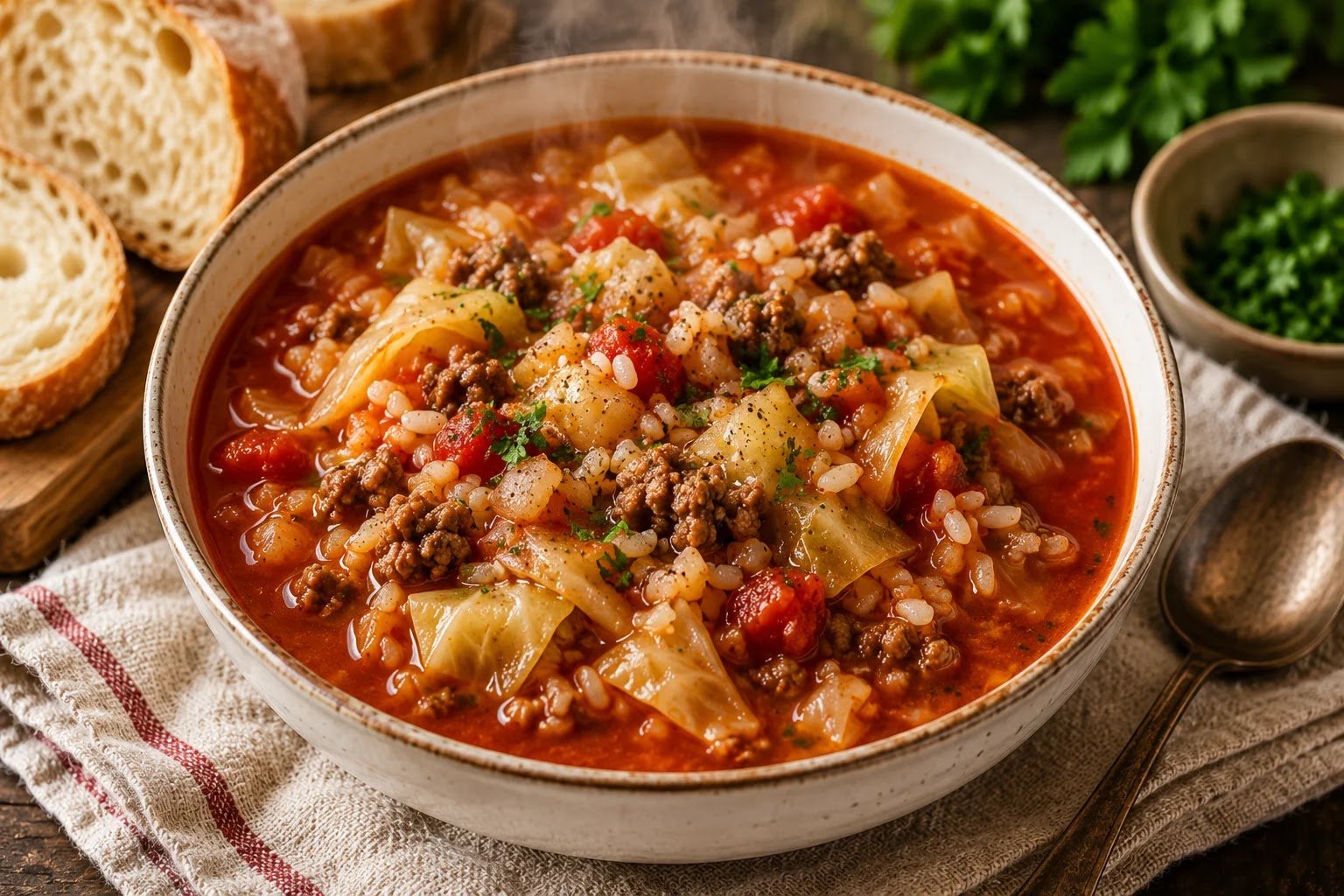
This soup solves that problem by throwing out the rolling entirely. Golumpki Soup takes every flavor that makes stuffed cabbage rolls so good — savory ground beef, tender rice, sweet-and-tangy tomato broth, soft ribbons of cabbage — and simmers it all together in one pot instead. You get the exact same comforting, slightly sweet-and-sour flavor profile, but in a fraction of the time, with zero rolling and almost no cleanup.
If you grew up with golumpki (or golabki, depending on which side of the family you’re on) at holiday tables, this soup will feel instantly familiar. And if you’ve never made stuffed cabbage rolls in your life, this is the easiest possible entry point — a genuinely hearty, one-pot dinner that tastes like it took all day, but comes together in under an hour.
QUICK RECIPE FACTS
| Prep Time | 15 minutes |
| Cook Time | 40 minutes |
| Total Time | 55 minutes |
| Servings | 6 |
| Cuisine | Polish-American |
| Course | Main dish, soup |
| Difficulty | Easy |
| Calories | ~290 per serving |
| Protein | 18g |
| Carbs | 24g |
| Fat | 13g |
TABLE OF CONTENTS
- Why You’ll Love This Recipe
- Ingredient Guide
- Equipment Guide
- Step-by-Step Instructions
- Expert Tips
- Common Mistakes
- Recipe Variations
- Serving Ideas
- Storage
- Troubleshooting
- Frequently Asked Questions
- Kitchen Essentials We Actually Use
- Recipe Card
WHY YOU’LL LOVE THIS RECIPE
This soup is for anyone who loves the idea of stuffed cabbage rolls but never has the time or patience to actually roll them. It’s for cold-weather cravings, for using up a head of cabbage before it goes soft in the fridge, and for anyone trying to stretch a pound of ground beef into a dinner that easily serves six.
Flavor-wise, you get the same sweet-tangy tomato broth that makes golumpki so crave able, balanced against savory beef and just enough rice to make each spoonful feel substantial. Texturally, the cabbage goes tender but keeps a little bite, so the soup never turns mushy the way some cabbage soups can. It’s naturally a fairly balanced, one-pot meal — protein, vegetables, and a starch all in the same bowl — and it reheats and freezes exceptionally well, which makes it one of the better make-ahead dinners in the cabbage-forward rotation.
If cabbage has become your go-to weeknight vegetable, this soup is only the beginning. For nights when you want that same tender-cabbage comfort but in a creamier, baked form instead of a broth, the Cabbage Alfredo Bake turns the same humble head of cabbage into a rich, cheesy casserole — proof that cabbage doesn’t have to mean soup every time it’s on the menu.
INGREDIENT GUIDE
Ground beef (1 lb., 85/15) — Provides the savory backbone that mimics the filling in a traditional cabbage roll. Ground turkey or a beef-pork blend both work as substitutes.
Cabbage (1 medium head, chopped) — Chop into bite-sized ribbons rather than large chunks so it cooks evenly and spoons easily. Look for a firm, heavy head with tight leaves.
Yellow onion (1, diced) — Builds the aromatic base; sweet onion works if you
prefer a milder flavor.
Garlic (3 cloves, minced) — Adds depth without overpowering the tomato-forward broth.
Long-grain white rice (¾ cup, uncooked) — Traditional in golumpki filling; adds body and starch as it cooks directly in the broth. Instant rice works but adjust simmer time down.
Crushed tomatoes (28 oz. can) — Forms the base of the broth; San Marzano-style tomatoes give the sweetest, least acidic flavor.
Beef broth (4 cups) — Rounds out the tomato base with savory depth; low-sodium lets you control salt.
Brown sugar (1 tablespoon) — Balances the acidity of the tomatoes, echoing the slightly sweet glaze found on baked cabbage rolls.
Apple cider vinegar (1 tablespoon) — Adds the tang traditional golumpki sauce is known for.
Bay leaf (1) — Infuses subtle background depth; remove before serving.
Smoked paprika (1 teaspoon) — Adds warmth and a faint smokiness reminiscent of slow-baked cabbage rolls.
Salt and black pepper — Season in layers, tasting again once the rice has fully cooked since it absorbs seasoning as it simmers.

EQUIPMENT GUIDE
Large heavy-bottomed pot or Dutch oven — Prevents scorching on the bottom during the longer simmer needed for the rice to cook through.
Wooden spoon — For breaking up the ground beef evenly as it browns.
Sharp chef’s knife — For chopping cabbage into consistent ribbons so it cooks evenly.
Ladle— For serving without leaving broth all over the counter.
Fine mesh strainer (optional) — Handy if you prefer to rinse the rice before adding it, which reduces excess starchiness in the broth.

STEP-BY-STEP INSTRUCTIONS
Step 1 — Brown the beef.
In a large pot over medium-high heat, cook the ground beef, breaking it into small crumbles with a wooden spoon, until no pink remains, about 5–7 minutes. Visual cue: beef should be deeply browned, not just gray, for the best flavor. Drain excess fat if there’s more than a tablespoon or two left in the pot. Getting a good, deep brown on the beef here matters more than people think.

Step 2 — Sauté the aromatics.
Add the diced onion to the pot with the beef and cook for 3–4 minutes until softened and translucent. Stir in the garlic and cook 30 seconds more, just until fragrant. Common mistake: letting garlic sit too long alone in a hot pot causes it to burn and turn bitter — keep it moving.
Step 3 — Add the cabbage.
Stir in the chopped cabbage and cook for 2–3 minutes, just until it starts to wilt slightly and turns a brighter green. It won’t be fully cooked yet — that happens during the simmer.
Step 4 — Build the broth.
Pour in the crushed tomatoes and beef broth, then stir in the brown sugar, apple cider vinegar, bay leaf, and smoked paprika. Season with salt and pepper. Bring the pot to a boil.
Step 5 — Add the rice and simmer.
Stir in the uncooked rice, reduce heat to low, cover, and simmer for 20–25 minutes, stirring occasionally to prevent the rice from sticking to the bottom. Timing cue: the soup is ready when the rice is tender and the cabbage has softened completely but still holds some texture.
Step 6 — Adjust and finish.
Remove the bay leaf. Taste and adjust salt, pepper, or a touch more vinegar or brown sugar to balance the broth to your liking. Expert tip: the soup will thicken as the rice continues to absorb liquid, so if it looks a little thin at this stage, that’s expected.
Step 7 — Rest briefly before serving.
Let the soup sit off heat for 5 minutes before ladling into bowls — this gives the rice a moment to finish absorbing broth and settles the flavors.
EXPERT TIPS
- Browning the beef properly (not just cooking it through, but letting it develop real color) makes a noticeable difference in the depth of the final broth.
- If you’re making this ahead, slightly undercook the rice, since it will continue absorbing liquid and softening in the fridge overnight.
- A parmesan rind simmered in the broth (removed before serving) adds a subtle umami note that rounds out the tomato base beautifully.
- For a thicker, stew-like texture, mash a few tablespoons of the cooked rice against the side of the pot before serving.
COMMON MISTAKES
Problem: Soup turns too thick or the rice is mushy.
Cause: Rice was simmered too long, or the soup sat too long before serving, letting rice continue to absorb liquid.
Solution: Cook rice just until tender, and add extra broth when reheating leftovers since the rice keeps soaking up liquid in the fridge.
Problem: Broth tastes too acidic.
Cause: Not enough balancing sweetness, or tomatoes on the more acidic side.
Solution: Add brown sugar in small increments and taste as you go rather than all at once.
Problem: Cabbage turns mushy instead of tender-crisp.
Cause: Cabbage was added too early or simmered longer than necessary.
Solution: Add cabbage right before the broth and rice go in, not earlier in the sauté step.
RECIPE VARIATIONS
Healthy / Lightened Up — Use ground turkey and swap white rice for brown rice, adding 10–15 extra minutes to the simmer.
High Protein — Add a can of drained kidney or white beans alongside the beef for extra protein and fiber.
Low Sugar — Reduce brown sugar to ½ teaspoon or omit, relying on the natural sweetness of the tomatoes.
Keto — Swap rice for cauliflower rice added in the last 10 minutes of simmering instead of the full cook time.
Gluten Free — Naturally gluten free as written; just confirm your broth and any add-ins are certified gluten free.
Dairy Free — Already dairy free unless you add the optional parmesan rind tip above.
Seasonal / Holiday — Add a small diced apple for a subtle sweetness that leans into a fall or holiday table.
Kid Friendly — Dice the cabbage a bit smaller and reduce paprika slightly for a milder flavor.
Party Version — Serve in a slow cooker on the buffet line to keep warm through a gathering.
Budget Version — Stretch the beef with an extra half cup of rice and swap fresh cabbage for a bag of pre-shredded coleslaw mix.
Luxury Version — Stir in a splash of heavy cream at the end for a richer, slightly rounded-out broth. If a splash of cream in your soup sounds like your kind of comfort food.
SERVING IDEAS
Dinner — Serve as a standalone one-pot meal with crusty bread for dipping.
Lunch / Meal Prep — Portions well into containers for grab-and-go weekday lunches.
Potluck — Transports easily in a slow cooker set to warm.
Fall / Winter Comfort Food — A natural fit for cold-weather dinner rotations.
Christmas / Holiday — A lighter, easier alternative to a full stuffed cabbage roll tray for a holiday starter course.
Game Day — Serve in mugs as a warm, sippable option alongside heartier game-day dishes.

Golumpki Soup already does most of the work for you, but if you want an even more hands-off version of cozy, one-pot dinners, the Easy Crockpot Soup Recipe is built for exactly that — load the slow cooker in the morning and come home to a hearty, freezer-friendly meal, no stovetop babysitting required
STORAGE
Refrigerator — Store in an airtight container for up to 4 days; rice will continue to absorb broth, so add a splash of water or broth when reheating.
Freezer — Freezes well for up to 3 months; for the best texture, slightly undercook the rice before freezing since it softens further upon reheating.
Reheating — Reheat gently on the stovetop over medium-low heat, stirring occasionally and adding broth as needed to loosen the soup.
Meal Prep — Cool completely before portioning to prevent excess condensation in storage containers.
TROUBLESHOOTING
Soup is too thin: Simmer uncovered for an extra 5–10 minutes to reduce, or mash a few spoonful’s of rice into the broth to thicken naturally.
Rice absorbed all the liquid: Add extra beef broth or water a half cup at a time while reheating until the consistency loosens back up.
Flavor tastes flat: Usually missing acid or salt — add a small splash of vinegar and taste again before adding more salt.
FREQUENTLY ASKED QUESTIONS
What is golumpki soup?
It’s a deconstructed version of stuffed cabbage rolls (golumpki or golabki), combining ground beef, cabbage, rice, and tomato broth into one pot instead of individually rolled and baked cabbage leaves.
Can I make this ahead of time?
Yes, though the rice will continue absorbing broth as it sits — add extra broth when reheating to bring it back to a soupier consistency.
Can I freeze golumpki soup?
Yes, it freezes well for up to 3 months; slightly undercooking the rice before freezing helps preserve better texture on reheating.
Is this recipe gluten free?
Yes, as written it’s naturally gluten free — just double-check your specific broth brand.
Can I use ground turkey instead of beef?
Yes, ground turkey works well and lightens the dish slightly while keeping the same overall flavor profile.
Why is my soup too thick the next day?
Rice continues to absorb liquid in the fridge, which is normal — simply add extra broth or water when reheating.
Can I make this in a slow cooker?
Yes — brown the beef and sauté the aromatics first, then transfer everything except the rice to the slow cooker on low for 4–5 hours, adding the rice in the last 30 minutes so it doesn’t overcook.
What’s the difference between golumpki and cabbage roll soup?
They’re generally the same dish under different names — golumpki (or golabki) is the Polish name for stuffed cabbage rolls, and this soup version goes by either name depending on regional or family tradition.
Can I add other vegetables?
Yes, diced carrots or bell peppers work well stirred in alongside the onion for extra texture and sweetness.
How do I make it lower carb?
Swap the rice for cauliflower rice added near the end of cooking instead of simmering the full time.
Can I double this recipe?
Yes, though you may need to simmer a few extra minutes for the larger volume of rice to fully cook through.
What can I serve alongside this soup?
Crusty bread, a simple green salad, or a light appetizer all pair well without competing with the rich tomato broth.
Why does my broth taste too acidic?
This usually comes down to the tomatoes used — add the brown sugar gradually to balance the acidity rather than all at once.
Can I use a different type of rice?
Yes, though cook times will vary; brown rice needs a longer simmer, while instant rice needs far less time and should be added closer to the end.
Is this soup spicy?
No, it’s mild and warmly spiced rather than spicy — add a pinch of red pepper flakes if you’d like some heat.
KITCHEN ESSENTIALS WE ACTUALLY USE
This post contains affiliate links. As an Amazon Associate, I earn from qualifying purchases at no extra cost to you.
Enameled Dutch oven
Best for: browning beef and simmering the soup in one pot without scorching.
Why it helps: even heat retention keeps the rice from sticking to the bottom during the longer simmer.
Key features: oven-and-stovetop safe, retains heat well for keeping soup warm at the table.
Buying consideration: heavier than a standard stockpot, so consider size relative to your stovetop.
Check current price on Amazon
Wooden spoon set
Best for: breaking up ground beef evenly while browning.
Why it helps: won’t scratch enameled or non-stick pot surfaces.
Key features: long handles keep hands away from hot broth splatter.
Buying consideration: wood requires hand-washing to last.
Check current price on Amazon
Sharp chef’s knife
Best for: chopping cabbage into even ribbons.
Why it helps: a sharp blade keeps cuts clean so the cabbage cooks evenly instead of shredding unevenly.
Key features: full tang construction, comfortable grip for repetitive chopping.
Buying consideration: needs occasional honing to maintain a clean edge.
Check current price on Amazon
Soup ladle
Best for: serving without a mess.
Why it helps: a deep bowl scoops rice and cabbage evenly along with the broth in each serving.
Key features: heat-resistant handle, hook design for resting on pot edges.
Buying consideration: choose stainless steel over plastic for durability with hot broth.
Check current price on Amazon
Glass meal prep containers
Best for: storing and reheating leftovers without lingering odors.
Why it helps: reheats evenly in the microwave or oven and resists staining from tomato-based broths.
Key features: airtight lids, stackable design for fridge or freezer storage.
Buying consideration: heavier than plastic, so factor that in for lunch portability.
Check current price on Amazon
Fine mesh strainer
Best for: rinsing rice before adding it to the pot.
Why it helps: reduces excess surface starch, keeping the broth from turning overly cloudy or gluey.
Key features: fine mesh catches even small grains without losing them down the drain.
Buying consideration: a smaller size is easier to store but slower for larger quantities.
Check current price on Amazon
Looking to round out the week with something a little different but still fast and satisfying? The Pepper Steak Stir-Fry Recipe shares that same better-than-takeout, thirty-minutes-or-less spirit as this soup, trading the tomato broth for a savory, glossy stir-fry sauce — a great option to keep in the rotation alongside your cabbage-forward comfort food nights.
RECIPE CARD
Golumpki Soup (Stuffed Cabbage Roll Soup)
Prep: 15 min | Cook: 40 min | Total: 55 min | Servings: 6

Ingredients
- 1 lb. ground beef (85/15)
- 1 medium head cabbage, chopped
- 1 yellow onion, diced
- 3 garlic cloves, minced
- ¾ cup long-grain white rice, uncooked
- 28 oz. can crushed tomatoes
- 4 cups beef broth
- 1 tablespoon brown sugar
- 1 tablespoon apple cider vinegar
- 1 bay leaf
- 1 teaspoon smoked paprika
- Salt and black pepper, to taste
Instructions
- Brown the ground beef in a large pot over medium-high heat, 5–7 minutes; drain excess fat.
- Add onion and cook 3–4 minutes until softened; stir in garlic, 30 seconds.
- Stir in cabbage and cook 2–3 minutes until it starts to wilt.
- Add crushed tomatoes, beef broth, brown sugar, vinegar, bay leaf, and smoked paprika; season and bring to a boil.
- Stir in rice, reduce heat to low, cover, and simmer 20–25 minutes, stirring occasionally.
- Remove bay leaf; taste and adjust seasoning.
- Rest 5 minutes before serving.
Notes: Rice continues to absorb broth as it sits, so add extra broth when reheating leftovers.
Nutrition (per serving): 290 calories, 18g protein, 24g carbs, 13g fat
2 thoughts on “Golumpki Soup (Stuffed Cabbage Roll Soup) – Easy One-Pot Recipe”