
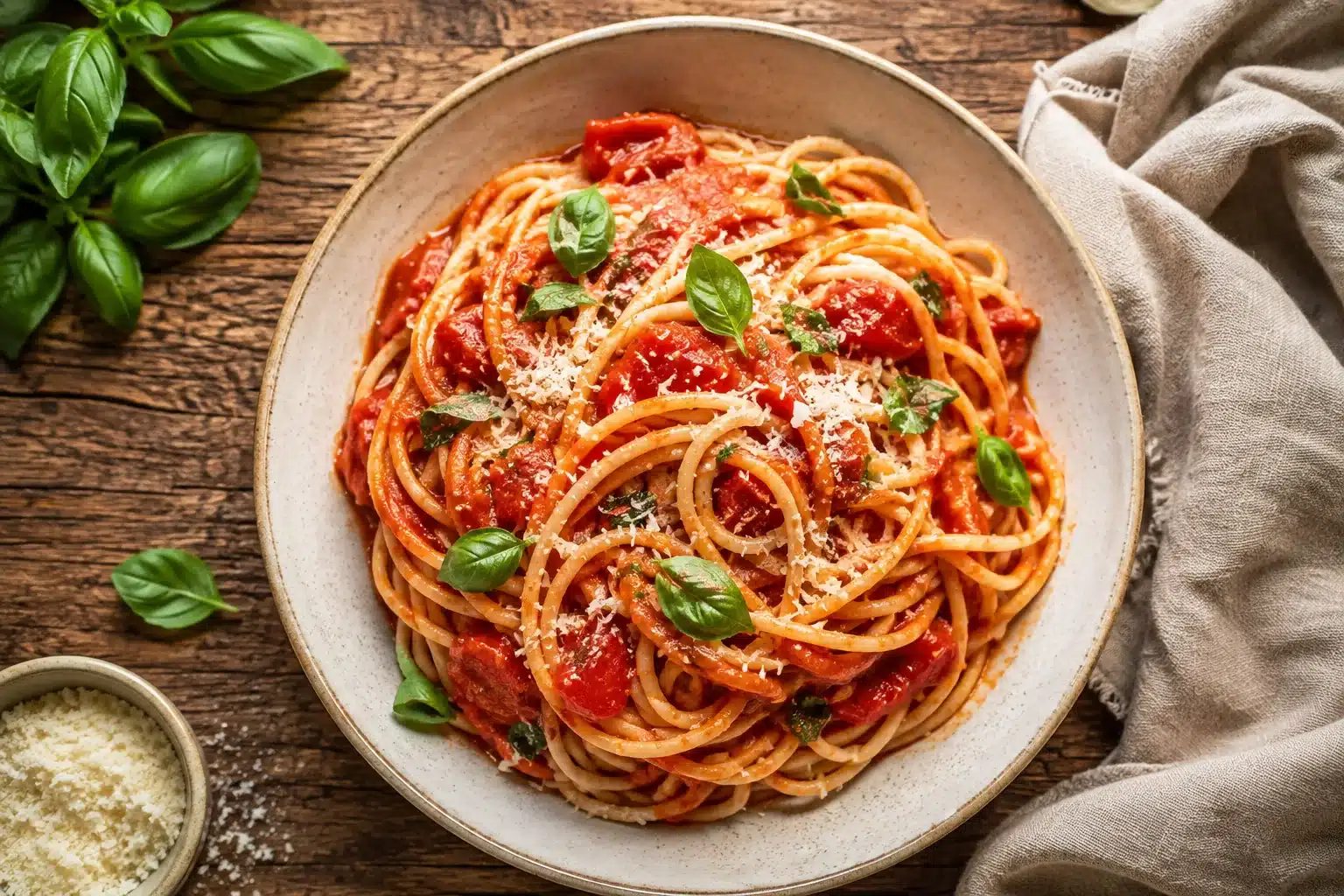
Fresh Tomato and Basil Pasta
This post may contain affiliate links. If you purchase through them, we may earn a small commission at no extra cost to you. Thank you for supporting our site.
There’s a particular kind of quiet that happens in my kitchen in late summer, right around the time the tomatoes on the counter go from “not quite ready” to “please use us immediately.”
That’s when this fresh tomato and basil pasta recipe gets made, usually two or three times a week, until the tomato season runs out and I start missing it again.
I didn’t invent tomato basil pasta. Nobody did, really — it’s one of those dishes that’s been made in Italian kitchens for generations, with small variations from house to house.
What I can tell you is how I make it after years of testing different ratios of garlic to tomato, different simmer times, and more than one batch that turned out watery because I rushed a step I shouldn’t have rushed. This version is the one I keep coming back to.
If you’ve ever wondered how restaurants make a tomato pasta taste so much brighter and more “tomato-y” than a jarred sauce, the answer usually comes down to three things: ripe tomatoes, good olive oil, and basil added at the right moment, not too early. That’s really the whole secret. No cream, no thickeners, no long simmering required.
This is a genuinely easy weeknight dinner. It also happens to be one of those dishes that looks and tastes like you put in more effort than you did, which makes it a quiet favorite for casual dinner parties too.
Quick Recipe Facts
| Detail | Info |
|---|---|
| Prep Time | 15 minutes |
| Cook Time | 20 minutes |
| Freeze Time | Not recommended |
| Chill Time | None |
| Total Time | 35 minutes |
| Servings | 4 |
| Cuisine | Italian-American |
| Course | Main Dish |
| Difficulty | Easy |
| Calories | 420 per serving |
| Protein | 12g |
| Carbs | 62g |
| Fat | 15g |
Table of Contents
- Why You’ll Love This Recipe
- Ingredient Guide
- Equipment Guide
- Step-by-Step Instructions
- Expert Tips
- Common Mistakes
- Recipe Variations
- Serving Ideas
- Storage
- Troubleshooting
- Frequently Asked Questions
- Kitchen Tools Worth Owning
- Recipe Card
Jump to Recipe — scroll to the bottom for the printable card.
Why You’ll Love This Recipe
This fresh tomato and basil pasta recipe is for anyone who wants a dinner that tastes bright and satisfying without much effort. Once you’ve made it a couple of times, you’ll find yourself reaching for it whenever tomatoes are in season. It’s built for busy weeknights, but it’s polished enough to serve when people come over.
Flavor: The tomatoes cook down just enough to turn jammy and slightly sweet, while staying recognizably fresh instead of tasting like canned sauce. Garlic and good olive oil round it out, and basil added at the end keeps everything tasting green and alive rather than cooked-down and dull.
Texture: You get silky strands of pasta coated in a light, clingy sauce, with soft bursts of tomato throughout rather than a thick, heavy gravy.
Nutrition: Because the sauce is made from whole tomatoes and olive oil rather than cream or butter, this dish stays on the lighter side while still feeling indulgent.
Convenience: One pot for the sauce, one pot for the pasta, and you’re eating in well under 40 minutes. If you want extra protein on the table, a batch of honey garlic chicken meatballs cooks in about the same amount of time and pairs nicely on the side.
Meal prep advantages: The sauce itself holds up nicely in the fridge for a few days, so you can make a double batch and portion it out over cooked pasta throughout the week.
Ingredient Guide for Fresh Tomato and Basil Pasta
Every ingredient here is doing a job. Here’s what each one brings to the dish, along with substitutions and shopping notes.
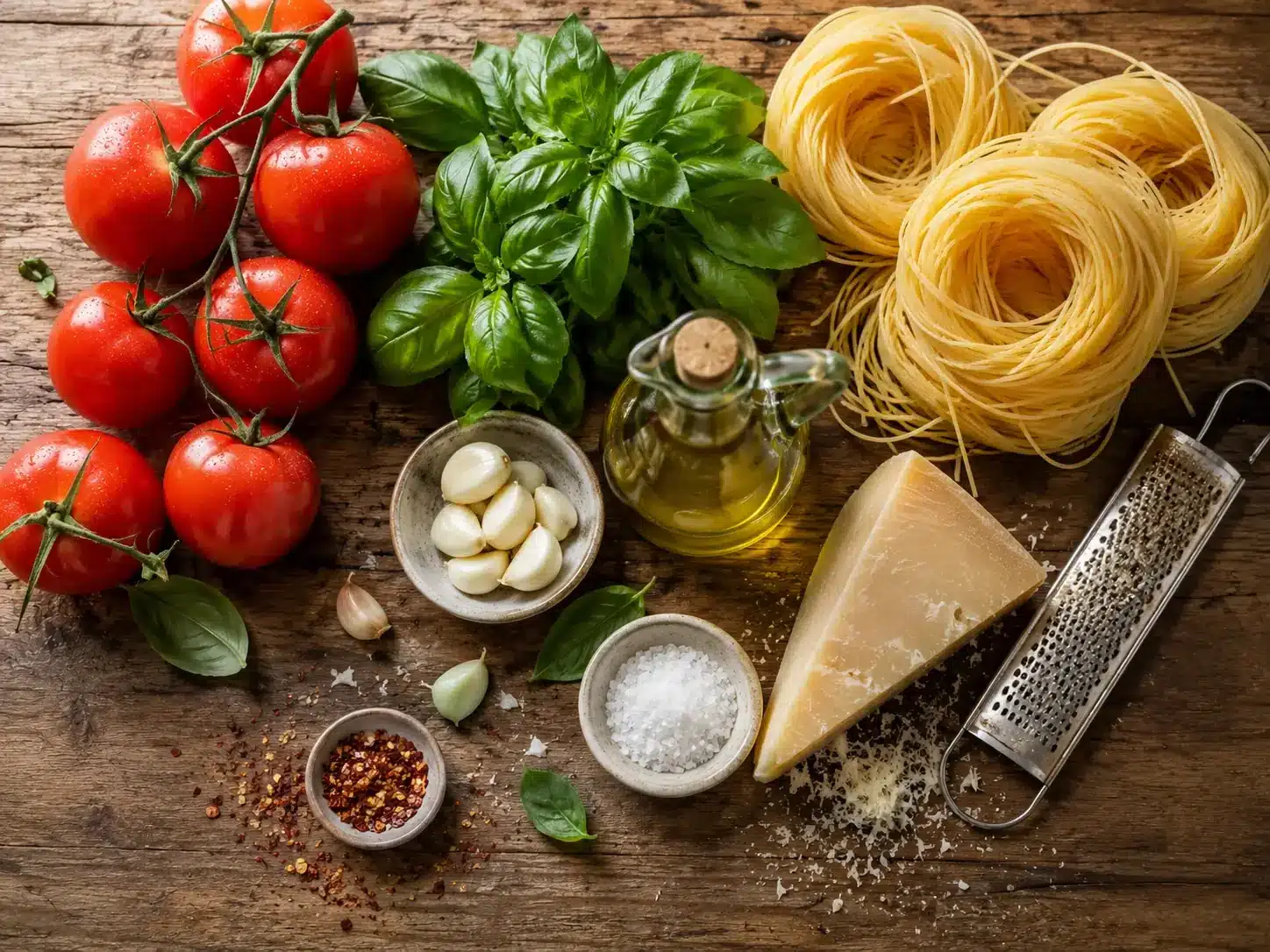
Fresh ripe tomatoes — This is the entire point of the recipe, so don’t skimp. Look for tomatoes that give slightly when pressed and smell sweet at the stem. Roma or plum tomatoes work well because they have less watery liquid, but a mix of vine tomatoes or cherry tomatoes also works beautifully. If tomatoes are out of season and genuinely flavorless, a good-quality canned whole tomato is a better substitute than a bland fresh one. Store fresh tomatoes at room temperature, never in the fridge, which dulls their flavor and texture.
Garlic — Adds savory depth without overpowering the tomatoes. Fresh cloves, minced or thinly sliced, are worth the extra minute compared to jarred garlic. Store whole heads in a cool, dark, ventilated spot.
Extra virgin olive oil — This isn’t just a cooking fat here; it’s a flavor ingredient. Use a good-quality olive oil, both for cooking the garlic and for finishing the dish. Store away from heat and light to keep it from turning bitter.
Fresh basil — Added mostly at the end so it stays bright green and aromatic instead of turning dark and bitter from prolonged heat. If you’re out of fresh basil, a small amount of dried basil added early in cooking can work in a pinch, though the flavor will be noticeably different. Store fresh basil stems-down in a glass of water at room temperature, like a small bouquet.
Pasta — Spaghetti, linguine, or a short shape like penne all work well. Choose a pasta with some texture to it (bronze-die cut, if you can find it) since it holds sauce better than a very smooth, glassy noodle.
Salt — Both for the pasta water and to season the sauce as it cooks. Season in layers rather than all at once for the most balanced flavor.
Red pepper flakes (optional) — A small pinch adds warmth without making the dish spicy. Easily omitted for a milder version or kids’ plates.
Parmesan cheese — Adds a salty, nutty finish. A block you grate yourself melts and clings to the pasta far better than pre-shredded cheese, which is coated in anti-caking agents that resist melting.
Sugar (a pinch, optional) — Balances acidity if your tomatoes are on the tart side. Not always necessary with truly ripe, in-season tomatoes.
Equipment Guide
You don’t need much for this recipe, but a few tools genuinely make it easier.
Large pot — For boiling pasta. A wide, tall pot gives the noodles room to move so they cook evenly.
Wide skillet or sauté pan — For building the sauce. A wide pan lets the tomatoes cook down efficiently instead of steaming in a crowded space. Budget alternative: any large, deep frying pan works.
Box grater or microplane — For grating fresh Parmesan. A microplane produces a finer, fluffier texture that melts more easily into hot pasta.
Tongs — Makes transferring pasta directly from the pot into the sauce far easier than using a strainer, and lets you carry a bit of starchy pasta water along with the noodles.
Sharp chef’s knife — For chopping tomatoes, garlic, and basil cleanly rather than crushing them, which affects both flavor release and appearance.
Professional alternative: a stand-alone pasta insert pot with a built-in strainer basket, which makes draining faster and safer.
Step-by-Step Instructions for Fresh Tomato and Basil Pasta
Step 1: Prep the tomatoes and garlic Core the tomatoes and roughly chop them into bite-sized pieces, keeping their juices. Mince the garlic finely.
Why: rough-chopped tomatoes break down at different rates, giving the sauce a naturally varied texture instead of a uniform puree. Look for: tomatoes releasing visible juice on the cutting board, which means they’re ripe enough to cook down properly.
Common mistake: chopping tomatoes too small, which turns them mushy and loses texture. Expert tip: chop over a bowl to catch every bit of juice, and add it straight into the pan later. Timing: about 8 minutes.
Step 2: Bring pasta water to a boil Fill your large pot with water, salt it generously (it should taste like light seawater), and bring it to a rolling boil. Why: well-salted water is your only chance to season the pasta itself from the inside. Look for: big, steady bubbles across the whole surface. Timing: 8–10 minutes depending on your stove.
Step 3: Warm the olive oil and garlic In your skillet, warm a generous pour of olive oil over medium-low heat, then add the garlic.
Why: low, gentle heat infuses the oil with garlic flavor without letting it turn bitter. Look for: garlic turning pale gold and fragrant, never brown.
Common mistake: high heat here, which burns garlic in under a minute and makes the whole dish taste bitter. Expert tip: keep the pan moving slightly so the garlic cooks evenly. Timing: 60–90 seconds.
Step 4: Add the tomatoes Add the chopped tomatoes and their juices to the pan, along with a pinch of salt. Raise the heat slightly to medium.
Why: salt draws out more liquid from the tomatoes early, helping them break down into a saucy consistency. Look for: tomatoes softening and releasing a visible pool of liquid within a few minutes. Texture cue: pieces should start to slump and lose their firm shape. Timing: 10–12 minutes.
Step 5: Cook pasta simultaneously Once the water is boiling, add your pasta and cook until just shy of al dente, about 1 minute less than the package suggests.
Why: the pasta will finish cooking in the sauce, which lets it absorb more flavor. Common mistake: overcooking here, which leads to mushy pasta once it’s tossed with sauce. Before draining, reserve at least a cup of the starchy pasta water.
Step 6: Reduce the sauce Let the tomato sauce simmer gently, stirring occasionally, until it thickens slightly and no longer looks watery. Look for: the sauce coating the back of a spoon rather than pooling thin. Expert tip: taste and adjust salt now, and add a small pinch of sugar if the tomatoes taste sharp rather than sweet. Timing: about 8 minutes.
Step 7: Combine pasta and sauce Using tongs, transfer the just-shy-of-done pasta directly into the skillet with the sauce, along with a splash of the reserved pasta water. Toss over medium heat for 1–2 minutes.
Why: this lets the pasta finish cooking directly in the sauce, and the starchy water helps the sauce cling to every strand instead of pooling at the bottom of the bowl. Visual cue: the sauce should look glossy and slightly emulsified, not oily or separated.
Step 8: Finish with basil and oil Remove the pan from heat, then stir in most of the fresh basil, torn by hand rather than cut with a knife, along with a final drizzle of good olive oil.
Why: adding basil off the heat keeps its flavor fresh and its color bright green. Common mistake: adding all the basil earlier in cooking, which turns it dark and slightly bitter. Save a few whole leaves for garnish.
Step 9: Serve immediately Plate the pasta right away, topped with freshly grated Parmesan, a few basil leaves, and a light crack of black pepper. Pasta dishes like this one are best enjoyed the moment they’re made, while the sauce is still glossy and the basil is still fragrant.
Expert Tips
- Salt the tomatoes early and let them sit in a bowl for 5 minutes before cooking. This jump-starts the juice release and speeds up the sauce.
- Finish the dish with raw olive oil off the heat, not all at the start. This “double olive oil” technique gives you both depth and brightness.
- Want a restaurant-style glossy finish? Whisk a small knob of cold butter into the sauce right before adding the pasta. It rounds out acidity without adding weight.
- For food styling, twirl the pasta into a tall nest using tongs. Then spoon extra sauce and a whole basil leaf on top for a magazine-style presentation.
- Warm your serving bowls briefly under hot tap water and dry them before plating. Cold bowls pull heat from the pasta almost instantly.
Common Mistakes
| Mistake | Cause | Solution |
|---|---|---|
| Watery sauce | Tomatoes not simmered long enough, or too much liquid added at once | Let the sauce reduce fully before combining with pasta; add reserved pasta water gradually |
| Bitter sauce | Garlic burned over high heat | Cook garlic low and slow, watching closely, and remove pan from heat if it browns too fast |
| Mushy pasta | Pasta cooked fully before being added to the sauce | Undercook pasta slightly and finish it in the sauce instead |
| Bland flavor | Under-salted pasta water or sauce | Season in layers: salt the pasta water generously, then taste and adjust the sauce separately |
| Dark, wilted basil | Basil added too early and cooked too long | Stir in most of the basil off the heat, right at the end |
| Sauce won’t cling to pasta | No starchy water used, or oil separated | Reserve pasta water and toss pasta directly in the sauce over gentle heat before serving |
Fresh Tomato and Basil Pasta Recipe Variations
Healthy: Use whole wheat or legume-based pasta and go slightly heavier on tomatoes relative to pasta for extra fiber.
High Protein: Stir in white beans, grilled chicken, or a fried egg on top; add extra Parmesan. If you want a pasta built around protein from the start, this high protein cottage cheese pasta is worth keeping in your weekly rotation too.
Low Sugar: Skip the pinch of sugar and choose naturally sweet, fully ripe tomatoes instead.
Keto: Swap pasta for spiralized zucchini noodles and reduce simmer time slightly since zucchini cooks fast.
Gluten Free: Use a gluten-free pasta labeled for al dente cooking, and finish it in the sauce a touch earlier than usual since gluten-free noodles can turn mushy fast.
Dairy Free: Skip the Parmesan or use a plant-based hard cheese alternative, and use olive oil in place of any butter finish.
Seasonal (Fall): Add roasted cherry tomatoes instead of raw chopped ones for a deeper, caramelized flavor when fresh tomatoes are past their peak.
Holiday: Add a spoonful of tomato paste and a splash of good red wine for a richer, more festive sauce.
Kid Friendly: Skip red pepper flakes, chop tomatoes very small, and stir in extra Parmesan for a milder, cheesier flavor.
Party Version: Serve as a pasta bar with extra toppings like grilled shrimp, burrata, and crusty bread on the side.
Budget Version: Use canned whole peeled tomatoes, crushed by hand, in place of fresh ones out of season.
Luxury Version: Finish with torn burrata, a drizzle of good finishing olive oil, and shaved Parmesan tableside.
Serving Ideas
This fresh tomato and basil pasta recipe is flexible enough to show up at almost any meal.
- Lunch: Serve smaller portions alongside a simple green salad.
- Dinner: Pair with garlic bread and a light white wine, or round out the plate with roasted cheese zucchini with Parmesan and cherry tomatoes as a tomato-forward side.
- Meal Prep: Portion the sauce separately from freshly cooked pasta for the best texture through the week.
- Potluck: Bring the sauce in a slow cooker set to “warm” and let guests spoon it over pasta themselves.
- BBQ: Serve as a cold pasta salad variation alongside grilled meats.
- Picnic: Pack a chilled version with extra olive oil to keep the noodles from sticking.
- Baby Shower or Bridal Shower: Serve in small individual cups as a light, elegant appetizer portion.
- Christmas or Thanksgiving: Use as a light starter course before a heavier holiday main.
- Game Day: Make a big batch in a short pasta shape for easy serving in bowls.
- Summer Parties: Serve family-style on a large platter with extra basil scattered over the top, and start the meal with caprese skewers with balsamic glaze for an easy tomato-and-basil appetizer that matches the flavors on the table.
Storage
Counter: Not recommended beyond 2 hours; pasta dishes with olive oil-based sauces don’t hold well at room temperature.
Refrigerator: Store in an airtight container for up to 3 days. The sauce alone (without pasta) keeps slightly longer, up to 4 days.
Freezer: Freezing is not recommended once pasta is combined with the sauce, since the texture turns watery and mushy upon thawing. The tomato sauce on its own can be frozen for up to 2 months in an airtight container.
Reheating: Warm gently in a skillet over low heat with a splash of water or broth to loosen the sauce. Microwaving works in a pinch, using short intervals and stirring between each.
Meal Prep: Store sauce and cooked pasta separately, then combine and reheat together just before serving for the best texture. This fresh tomato and basil pasta recipe is one of the easier pasta dishes to prep ahead for exactly that reason.
Shelf Life: Best enjoyed within 3 days for optimal flavor and texture.
Troubleshooting
My sauce is too acidic. Add a small pinch of sugar or a small knob of butter to round out the sharpness.
My pasta is sticking together. This usually means it sat too long without sauce or oil. Toss with a little reserved pasta water or olive oil to loosen it.
My sauce separated and looks oily. This happens when oil and water aren’t emulsified together. Whisk in a splash of starchy pasta water over low heat to bring it back together.
My tomatoes never broke down into a sauce. They may have been underripe. Give them more time over slightly higher heat, or add a small splash of water to help them along.
Frequently Asked Questions
Can I use canned tomatoes instead of fresh? Yes. High-quality canned whole tomatoes, crushed by hand, work well when fresh tomatoes are out of season or lacking flavor.
Do I need to peel the tomatoes first? Peeling is optional. Leaving the skins on adds a bit of texture and saves time; some cooks prefer to peel for a smoother sauce.
Can I make this recipe ahead of time? The sauce can be made up to 3–4 days ahead and stored in the fridge, then tossed with freshly cooked pasta when you’re ready to eat.
What’s the best pasta shape for this recipe? Spaghetti and linguine are classic choices, but any pasta shape that holds a light sauce well, including penne or fusilli, works nicely.
Is this recipe vegetarian? Yes, as written it’s vegetarian. For a vegan version, simply omit the Parmesan or use a plant-based alternative.
Why did my basil turn black? Basil oxidizes quickly once cut and exposed to heat for too long. Tear it by hand and add most of it at the very end of cooking to preserve its color.
Can I add protein to this dish? Absolutely. Grilled chicken, shrimp, or white beans are all easy additions that don’t compete with the tomato and basil flavors.
How do I know when my tomatoes are ripe enough? Ripe tomatoes give slightly when gently pressed, smell fragrant at the stem, and feel heavy for their size.
Can I use dried basil instead of fresh? You can, though the flavor will be noticeably less bright. Add dried basil earlier in the cooking process, since it needs time to rehydrate and release flavor.
Why is my sauce watery? The tomatoes likely needed more time to reduce. Let the sauce simmer uncovered a bit longer before adding the pasta.
Can I double this recipe? Yes, this fresh tomato and basil pasta recipe scales well. Use a wider pan so the tomatoes have enough surface area to reduce properly.
Is this recipe spicy? Not unless you add red pepper flakes, which are optional and easy to adjust to taste.
Can I use a slow cooker for the sauce? Yes, though you’ll lose a bit of the bright, fresh flavor that comes from a quicker stovetop simmer.
What can I serve alongside this pasta? A simple green salad, garlic bread, and a light white wine all pair nicely with this dish.
How long does leftover pasta last in the fridge? Up to 3 days when stored in an airtight container.
Kitchen Tools Worth Owning
A few tools genuinely make this recipe, and general pasta cooking, easier and more enjoyable. These are pieces I’ve relied on for years in my own kitchen.
Wide stainless steel sauté pan — Best for building sauces that need room to reduce evenly. Look for one with a heavy bottom so heat distributes evenly and nothing scorches. Buying consideration: a lid is useful for other recipes, even if you rarely need it here.
Microplane grater — Best for grating Parmesan into a light, fluffy texture that melts into hot pasta instantly. Look for stainless steel blades that stay sharp over years of use.
Large pasta pot with strainer insert — Best for anyone who cooks pasta often and wants to skip wrestling a colander over the sink. Key feature: a basket that lifts straight out, letting you save pasta water easily.
Silicone-tipped tongs — Best for tossing pasta directly in a hot sauce pan without scratching nonstick surfaces. Buying consideration: choose a pair with a locking mechanism for easy storage.
Wooden cutting board, medium size — Best for chopping tomatoes and basil without dulling your knife. Look for one that’s easy to clean and doesn’t retain strong odors.
Sharp 8-inch chef’s knife — Best for clean cuts on tomatoes and herbs, which affects both flavor and how the dish looks on the plate. Buying consideration: a knife that holds an edge well saves regular sharpening.
Olive oil cruet with pour spout — Best for controlling how much oil you drizzle in at each stage of cooking, especially the finishing drizzle. Look for a design that’s easy to refill and doesn’t drip down the side.
Glass meal prep containers — Best for storing extra sauce or leftover pasta in the fridge without picking up plastic odors or stains from the tomatoes. Buying consideration: choose containers with airtight lids to keep the sauce fresher longer.
A quick note: these are simply tools that have made this recipe easier and more enjoyable in my own kitchen over the years. Use whatever you already have on hand — great pasta doesn’t require fancy equipment.
A Note on Food Safety
When working with fresh produce and dairy, it’s worth following guidance from a trusted source like the USDA’s food safety guidelines on storage temperatures and how long cooked pasta dishes should sit at room temperature before refrigerating.
Recipe Card
Fresh Tomato and Basil Pasta Recipe
A bright, easy pasta made with ripe tomatoes, garlic, olive oil, and fresh basil, ready in about 35 minutes.
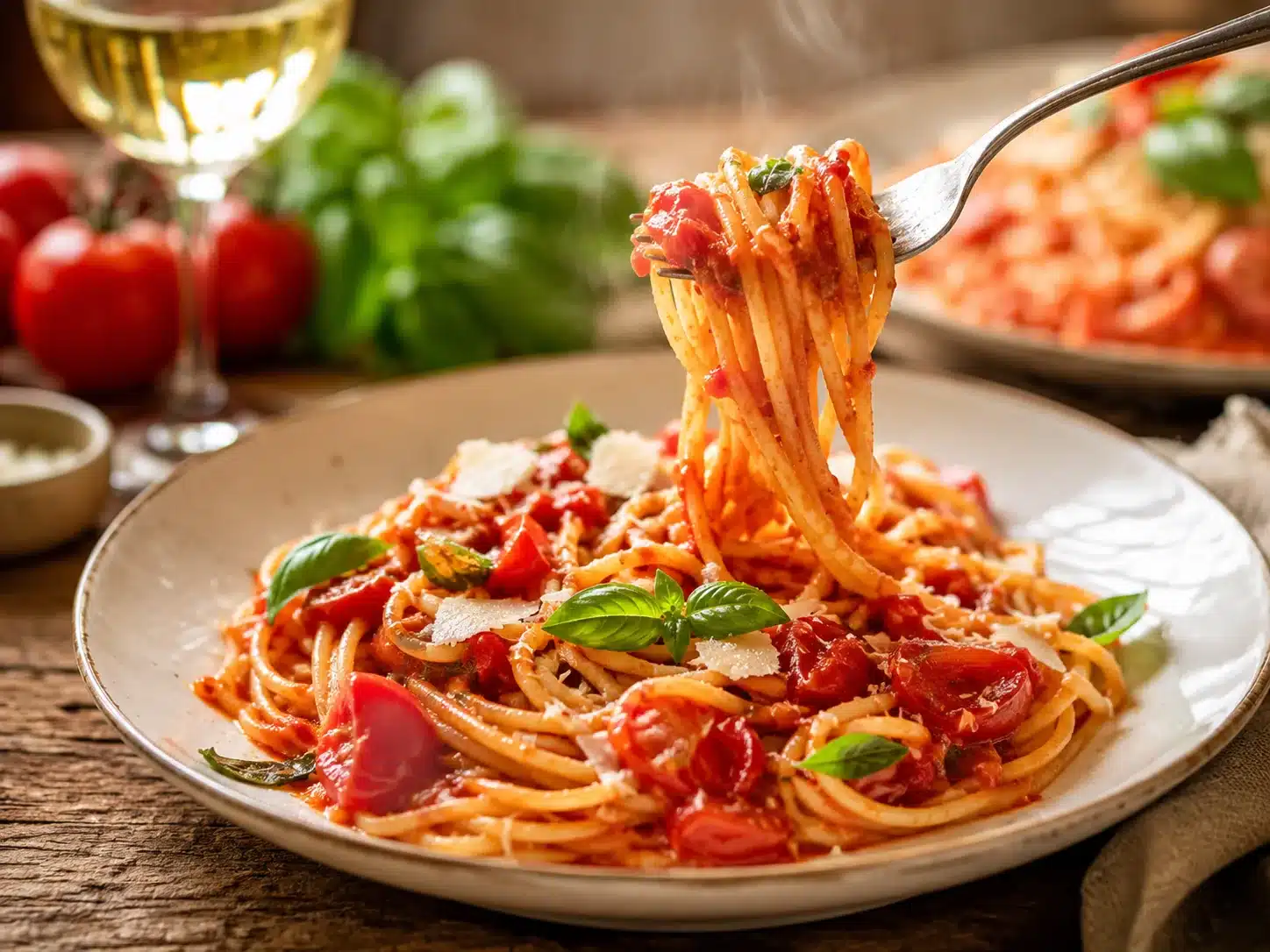
Servings: 4 (easily scaled up or down)
Ingredients
- 2 pounds ripe tomatoes, cored and chopped
- 4 cloves garlic, minced
- 1/3 cup extra virgin olive oil, divided
- 12 ounces spaghetti or linguine
- 1 cup fresh basil leaves, torn, divided
- 1/2 teaspoon red pepper flakes (optional)
- Salt, to taste
- Pinch of sugar (optional)
- 1/2 cup freshly grated Parmesan cheese, plus more for serving
- Black pepper, to taste
Instructions
- Bring a large pot of generously salted water to a boil.
- Warm 2 tablespoons olive oil in a wide skillet over medium-low heat. Add garlic and cook until fragrant, about 1 minute.
- Add chopped tomatoes and a pinch of salt. Simmer over medium heat, stirring occasionally, until thickened, about 10–12 minutes.
- Cook pasta until just shy of al dente. Reserve 1 cup of pasta water, then drain.
- Add pasta to the skillet with the sauce, along with a splash of pasta water. Toss over medium heat for 1–2 minutes.
- Remove from heat. Stir in most of the basil and remaining olive oil. Season with salt, pepper, and sugar if needed.
- Serve immediately topped with Parmesan, remaining basil, and black pepper.
Notes
- Undercooking the pasta slightly before adding it to the sauce is key to the best texture.
- Add basil at the end to keep its color bright and its flavor fresh.
- This recipe is easily doubled for a crowd; use a wider pan so the sauce reduces evenly.
Nutrition (per serving)
Calories: 420 | Protein: 12g | Carbs: 62g | Fat: 15g
Scaling: For 2 servings, halve all ingredients. For 8 servings, double all ingredients and use a very wide pan or work in two batches so the tomatoes reduce properly instead of steaming.
1 thought on “Fresh Tomato and Basil Pasta Recipe: The Best Easy 30-Minute Dinner”